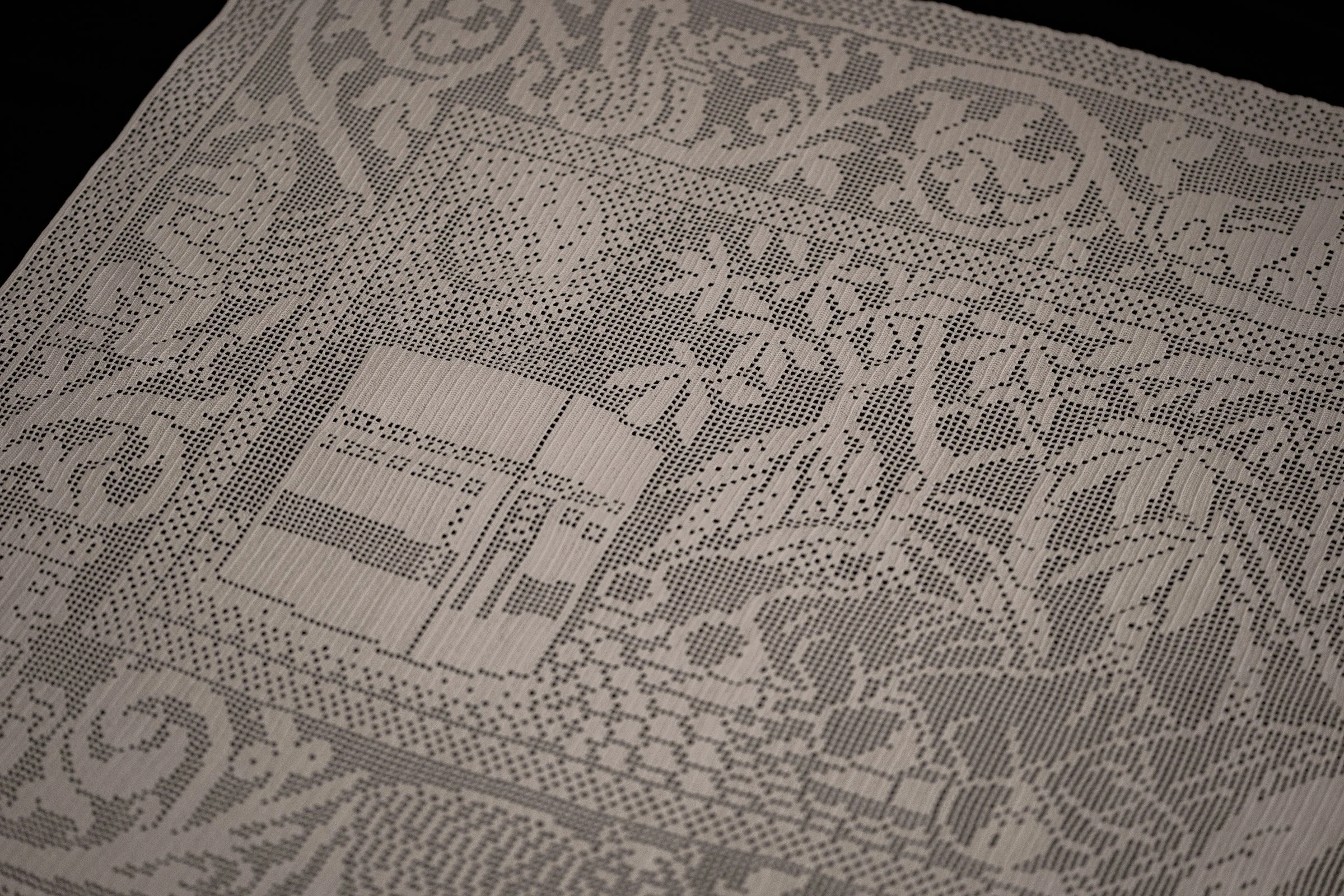
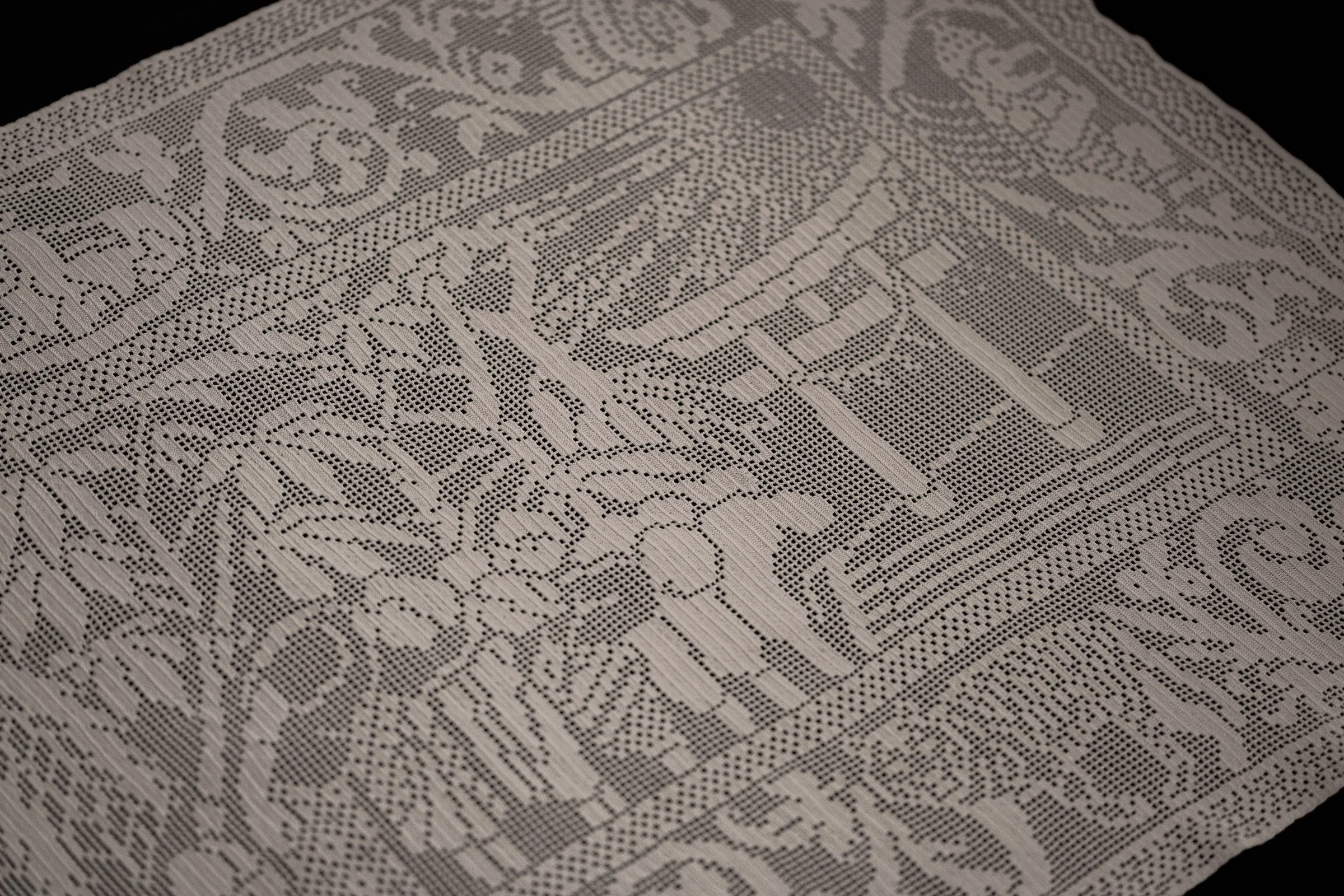
Qiwulun
2026
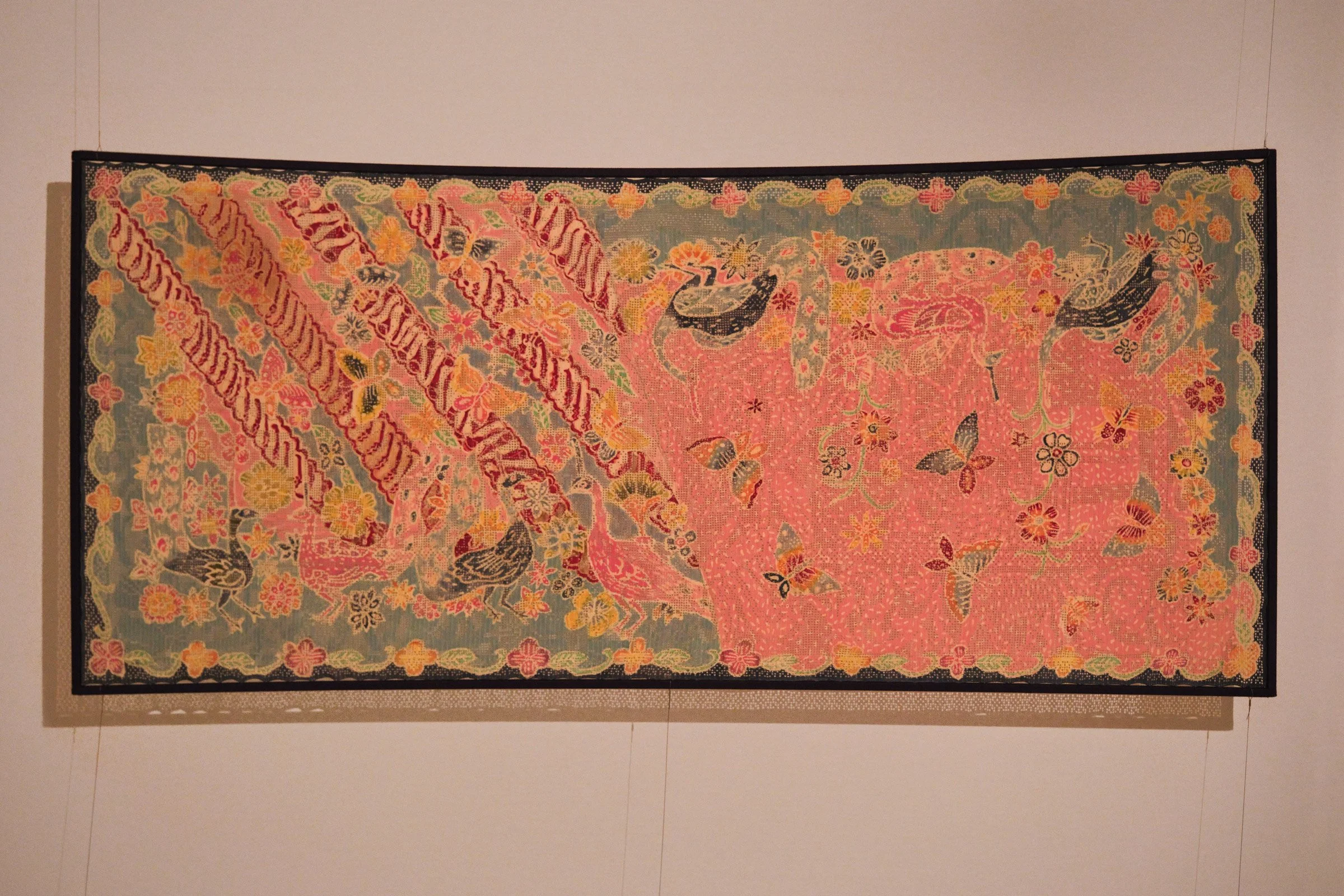
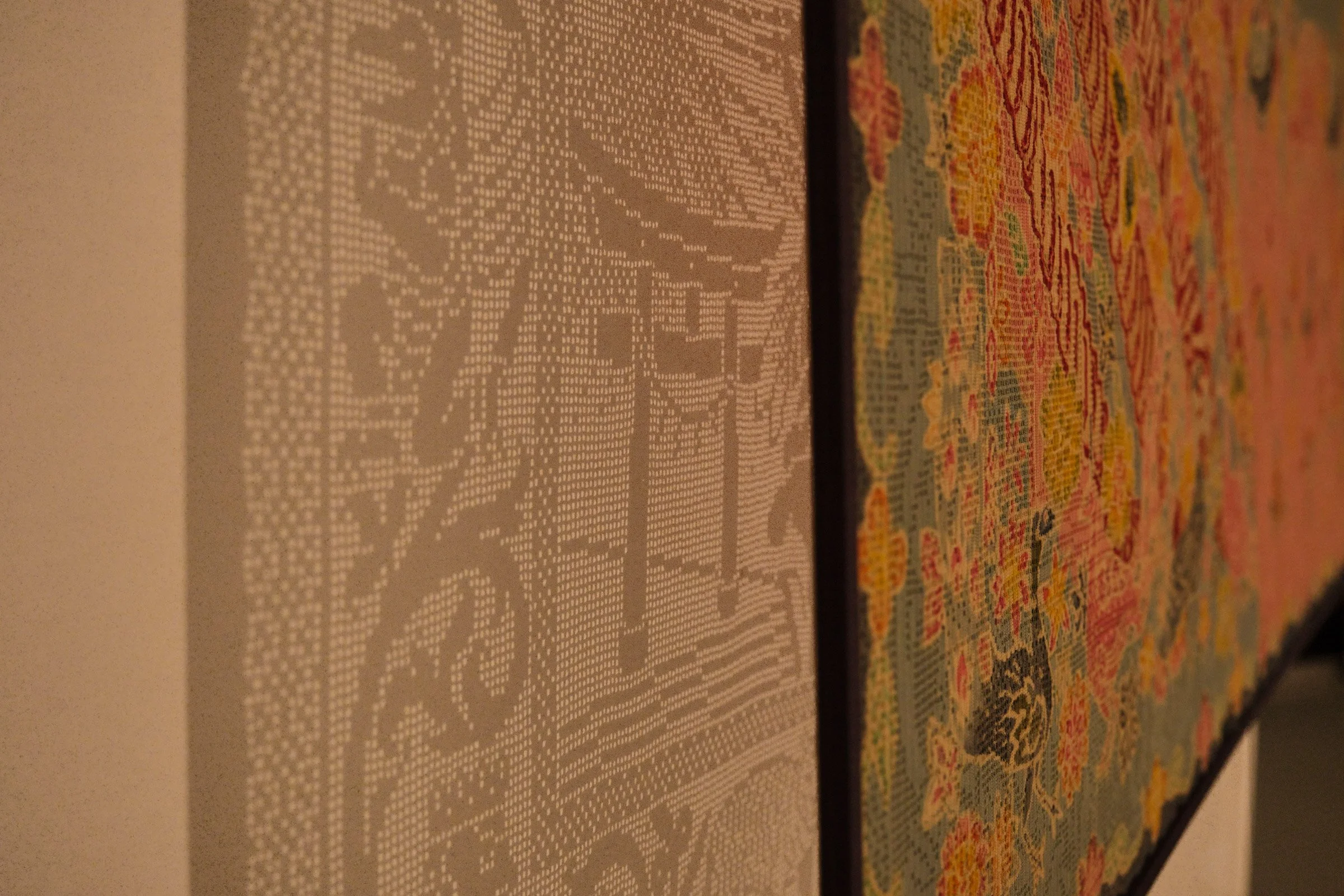
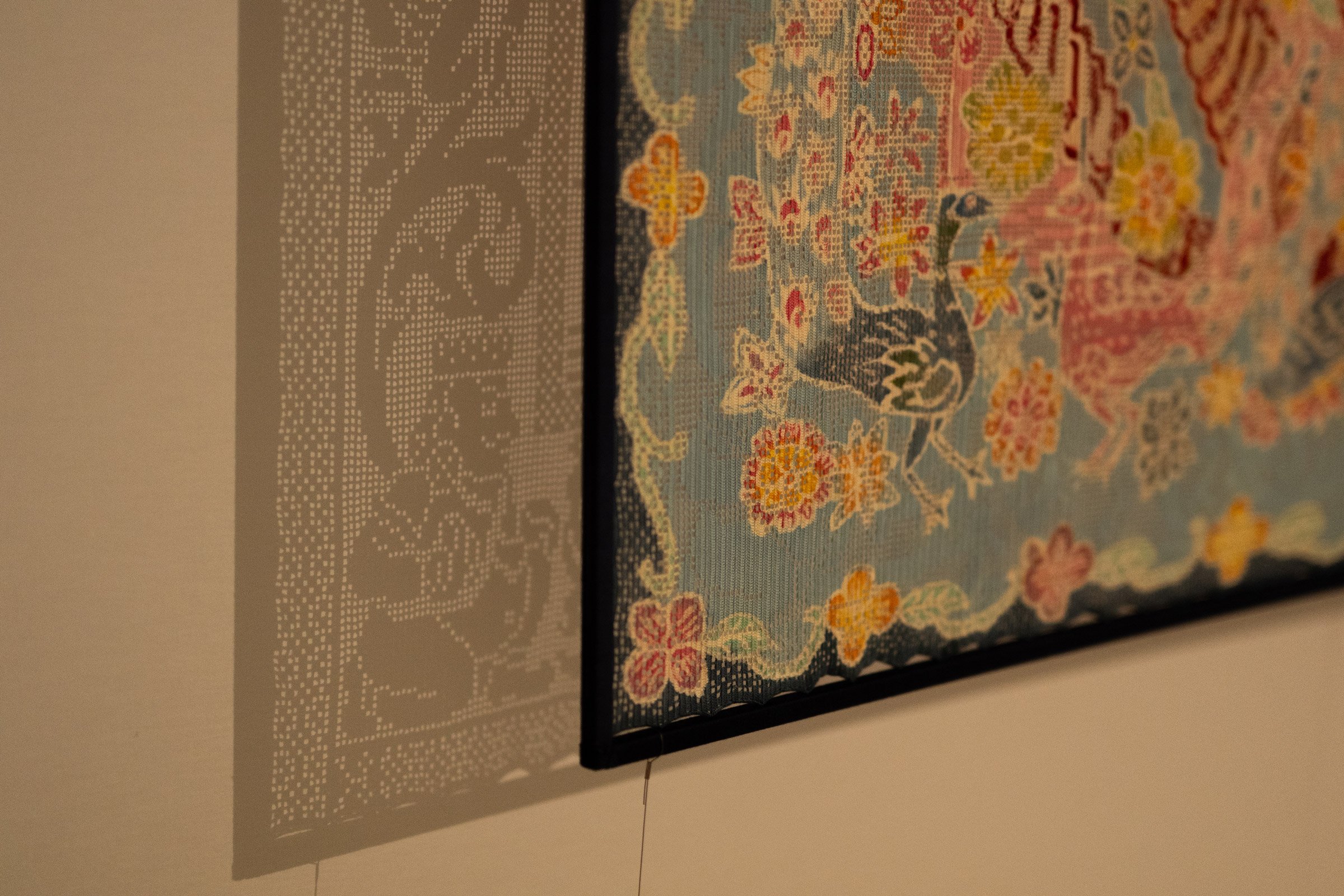
Crocheted cotton thread dyed with batik (wax resist) method
142cmW x 62cmH
Collaborating batik artisan: Heru Sarasa House Jogja (Yogyakarta)
Malangkuçeçwara
2026
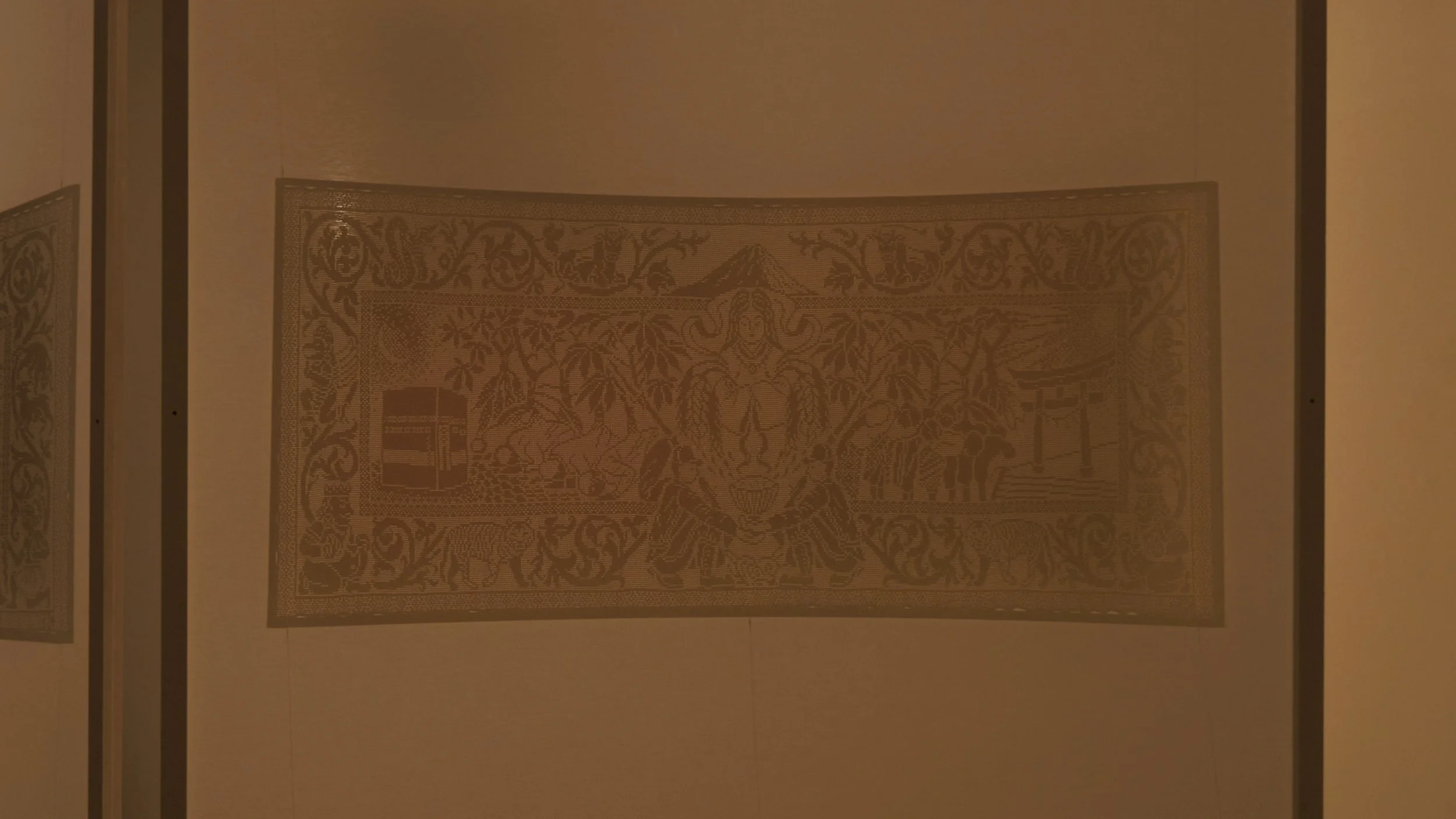
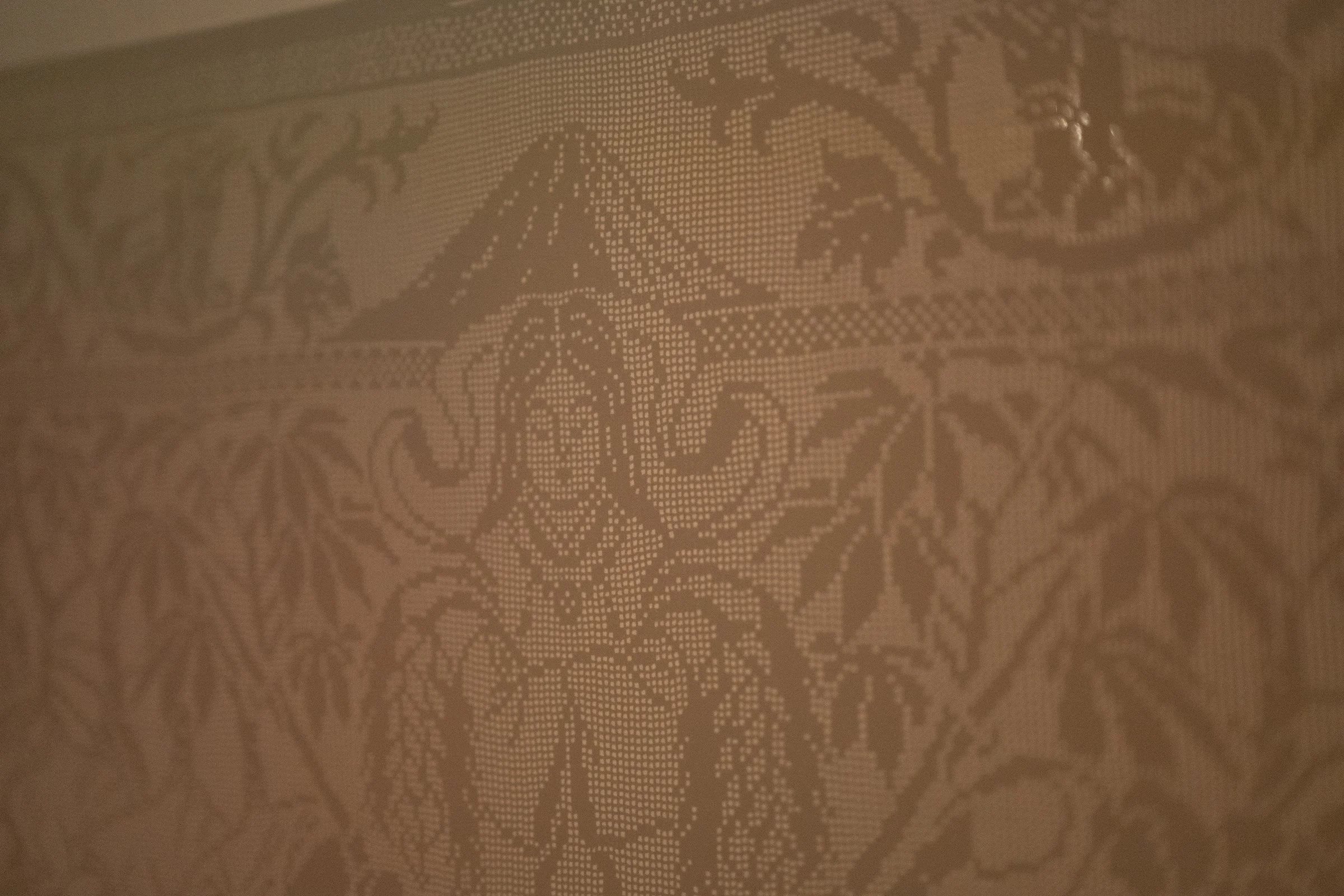
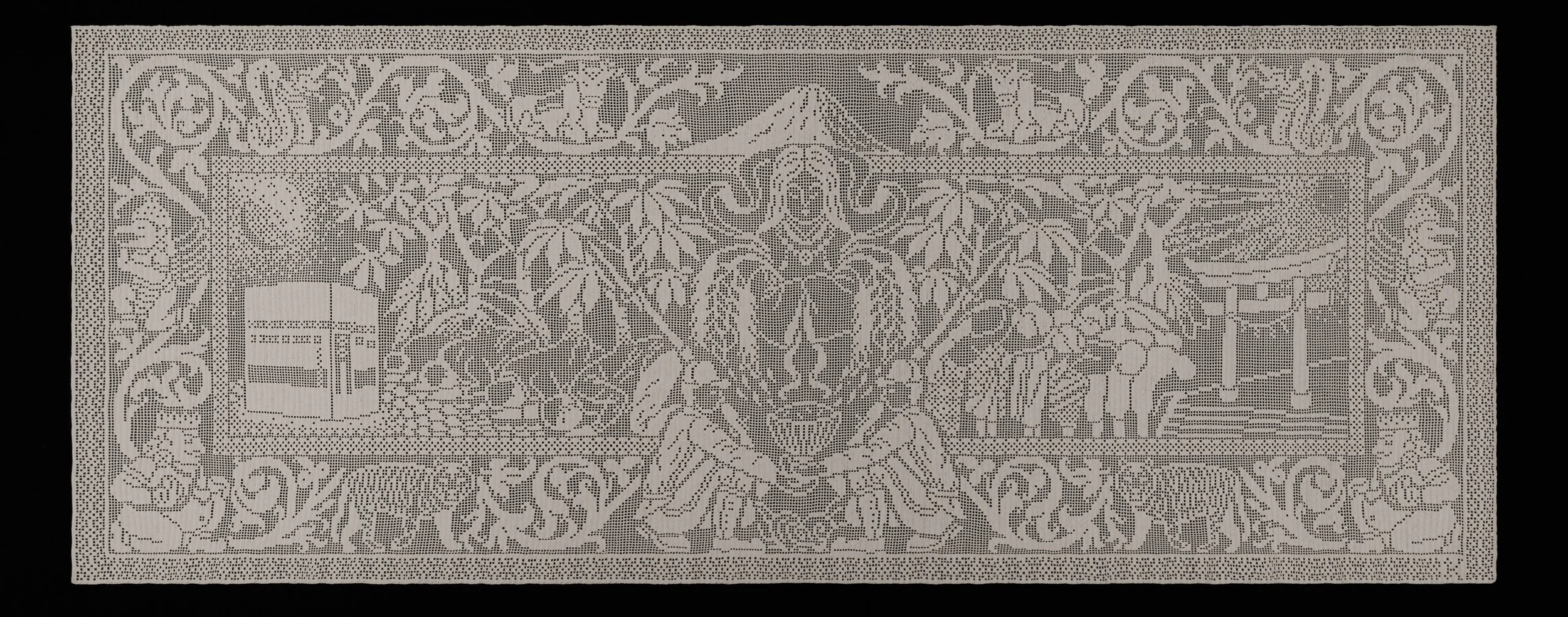
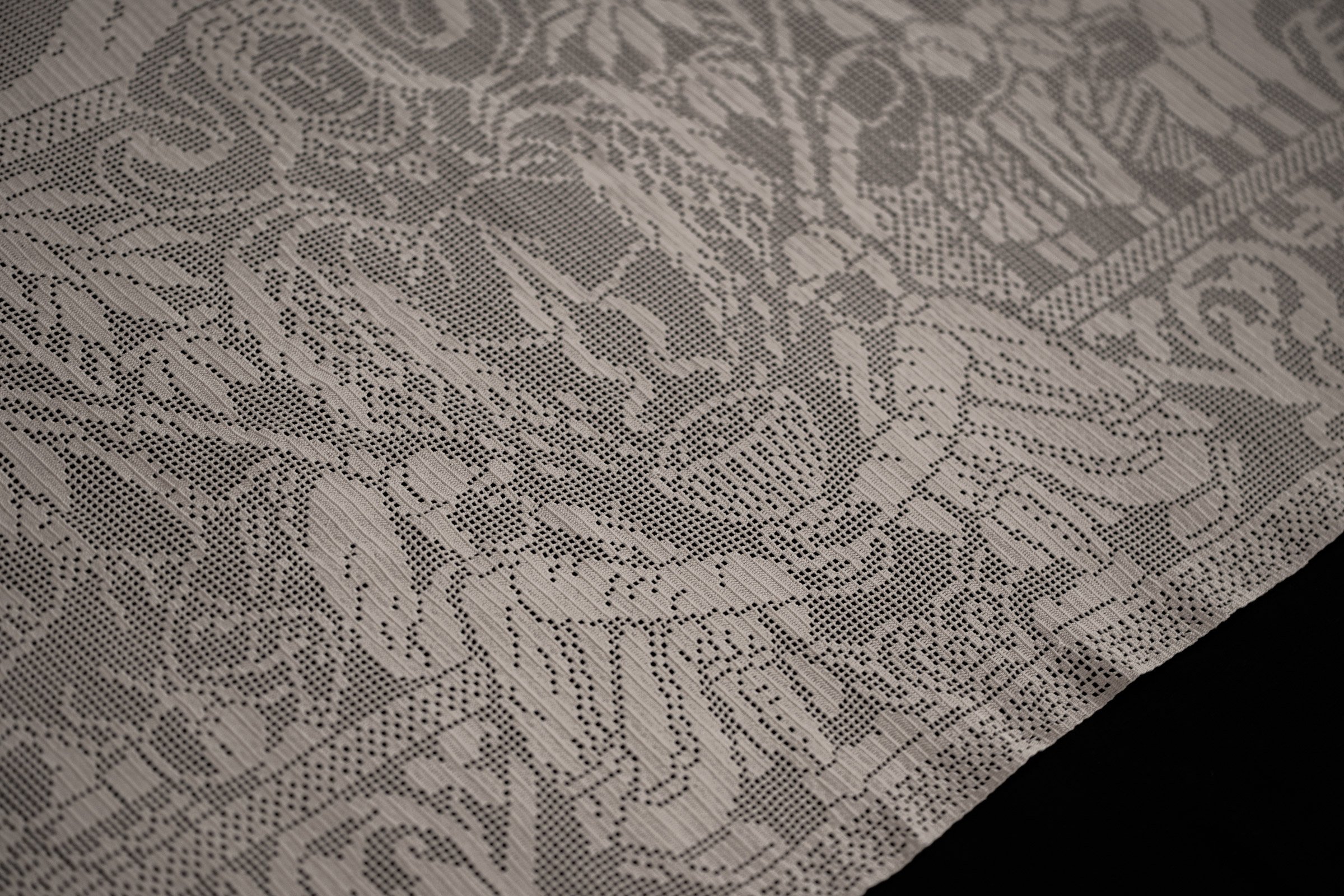
Photograph of crocheted lace before batik dyeing
The third and final artwork completing the triptych alongside Anekanta (2024) and Vedurnan (2025), Qiwulun focuses on the food staple cassava, and the period of Japanese Occupation of Indonesia (1942-1945).
In the centre of the piece is the Shinto goddess Ukemochi, the Deity who Protects Food. In a similar fashion to how Hainuwele (in Vedurnan) excretes valuables, she instead ejects it from her mouth. Offended at her serving him ‘impure’ food, the god Tsukiyomi, brother of Sun Goddess Amaterasu kills Ukemochi. From her various body parts grow plants and animals useful to humankind, which is a story echoed in all 3 artworks.
The scene of this artwork is set in Malang, a city in Indonesia which was popular with Europeans during Dutch colonisation due to its mild climate. During the Japanese Occupation, the Japanese military took over governance from the Dutch, and built the second largest Shinto shrine in Malang—Ching Nan Shrine.
Ukemochi divides the canvas; on the right of the frame is a Shinto torii, with the sun representing Amaterasu behind it. On the opposite end is a crescent moon hanging above the Kaaba in Mecca, which marks the direction towards all Muslims pray. During the Japanese Occupation, locals were forced to perform ‘seikeirei’ (deep bowing) in the direction of the sun (towards Amaterasu) or be punished, sometimes brutally. This was considered an assault on the locals’ religious beliefs, especially for Muslims as it resembled their prayers and meant they had to turn their backs against the Mecca.
From the bowed backs of the locals, regardless of what direction they face, cassava plants grow. Carrying the burden of war on their backs, the people become a source of energy that is being drained. The only rice in the frame is held by Ukemochi, but she is guarded by military soldiers and their bayonets, holding up a rice bowl for themselves. During WW2, cassava became the only source of food for many as rice was too precious and went to the Japanese military. However, this was not exclusive to Indonesia or Malaya; the ordinary civilians in Japan suffered the same fate too.
Behind Ukemochi is a recognisable silhouette. While one might identify it as Mount Fuji, it is in fact another volcano in Malang: Mount Semeru. Coincidentally, Semeru (3,676m) is shorter than Fuji (3,776m) by only 100m.
While divides such as nationality, race and religion can be clear to us, Qiwulun suggests that the divides might be drawn differently if we change our perspective. Similarities might surface between seemingly opposite entities, and those that are possibly alike might be separated by boundaries we have yet to consider.
The motifs in the frame are inspired by Malang’s historical connection with the Singhasari Kingdom, and the temples left behind in the city.
The batik pattern for this artwork was inspired by Batik Hokokai, an iconic style of batik produced in Indonesia to meet Japanese market demand during the Japanese Occupation. This is characterised by motifs like peacocks, butterflies, certain flowers, bright colours and the ‘pagi-sore’ (morning-evening) pattern, which is a diagonal line splitting the fabric into half. Due to the shortage of fabric during the war, this style allowed 2 different designs to be worn at different times of the day, from the same cloth.
*Frame lace pattern appropriated from “IV LE FILET ANCIEN AU POINT DE REPRISE” by WOLF & DUPEYRON (antiquepatternlibrary.org)
Photos of Malangkuçeçwara: Clarence Aw