An essay reflecting on my personal experience and gravitation towards hair, hair as a medium in craft and art, and thoughts behind my sculpture, JPY50,000 (SGD414.94).
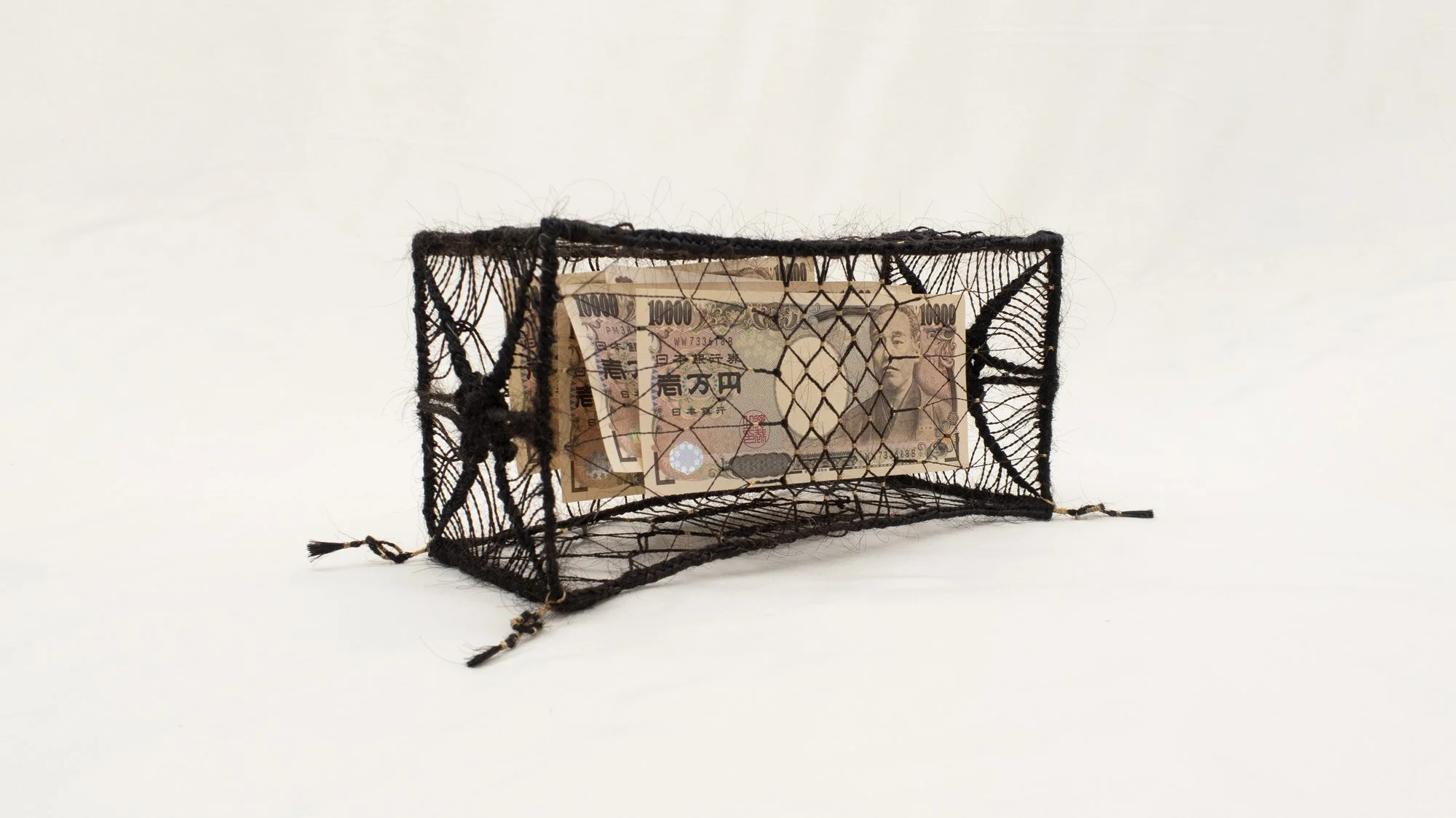
JPY50,000 (SGD414.94), 2026. Artist’s hair, Japanese banknotes, wire, glass beads.
Magic, Folklore, and the Spiritual Power of Hair
When I was a child, my mum often told me stories of how hair was the main ingredient for black magic. “Let someone have a strand your hair,” she warned, “and that person can put a curse on you.” I had mailed my best friend a letter during that time, and put a lock of my hair in as a gift. My friend never received the letter, but I fell terribly sick with a fever, and was convinced that someone had found the letter and made a spell out of it.
Such folklore surrounding the mystique of hair is not so uncommon in Southeast Asia. Many a ghost story we have heard told over campfire nights in school camps or read intently from the popular True Singapore Ghost Stories by Russell Lee, tells us about the Pontianak’s long, black hair hiding her face, or about how someone is cursed with a bundle of their hair tied to an effigy. The role of hair in Southeast Asia’s mythology and oral storytelling has given it a spiritual status with those who lean into superstition, of which I am guilty of.
Even outside Southeast Asia, folktales and fantasy stories place power in these seemingly fragile strands. In one version of Maui and the Sun, a Polynesian folktale, the protagonist weaves a snare out of flax and his sister’s hair to trap the Sun. In Hayao Miyazaki’s version of Howl’s Moving Castle, Calcifer gains courage and strength to rebuild the castle after consuming Sophie’s hair braid. Besides mythology, hair also holds sentimental value, such as in the practice of keeping locks of hair from loved ones, or creating jewelry out of them in the Victorian era. All of these has fed my fascination for this unconventional ‘material’ since a young age.
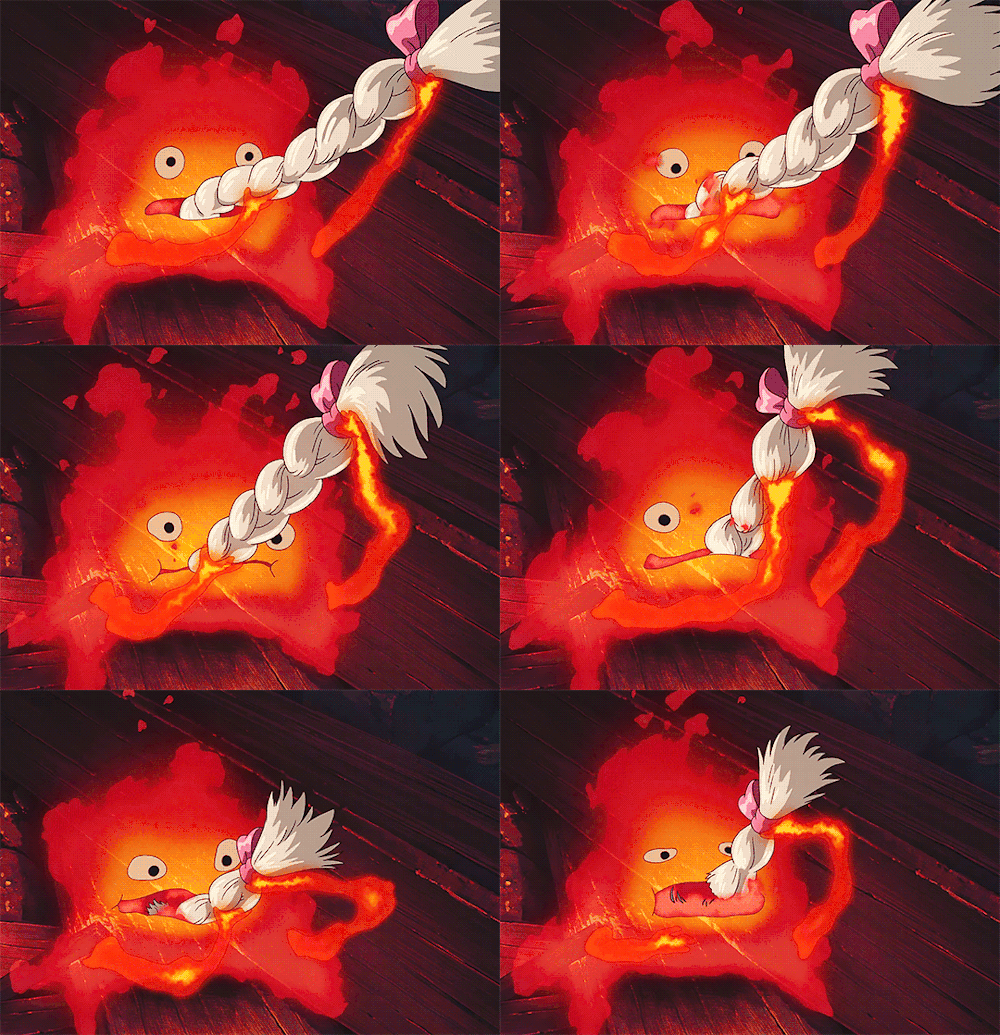
Calcifer chomping on Sophie’s braid. Howl’s Moving Castle (2004)
Hair as Medium
Hair is strangely intimate; accidentally touching anyone’s other than your own feels intrusive or even disgusting. The springy texture, the smooth surface between fingers—something that your tongue immediately recognises if it accidentally ends up in your mouth. It is a texture that is recognisably human by touch and even by sight, and in that closeness to our species yields strong cultural, historical and sentimental power as a medium.
My first encounter with an artwork that used hair as a main medium was in 2011 during the Singapore Biennale. I remember being equal parts awed and horrified when I stepped into the high-ceilinged room, with dark, matted looking braids coiled in a haphazard way from ceiling to floor, ensnaring steel car bumpers. This work references the practice in Bengaluru, India of tying lengths of hair to car bumpers to ward off accidents. In Hinduism, head shaving is a common practice during a pilgrimage to sacred sites, as a means of shedding the ego or worldly attachments.
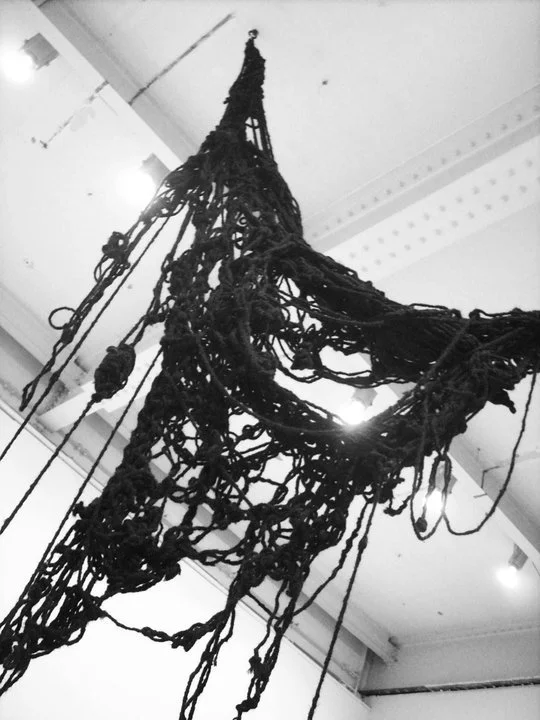
Behold, 2009. Sheela Gowda. Shot by me during the SIngapore Biennale 2011.
Hair as a medium has gained much popularity in recent years. From amassing large quantities from other sources like Sheela Gowda, to using personal hair collected over time alike a ritual like Imhathai Suwatthanasilp, and finally in material innovation turning human hair waste into a sustainable resource like Studio Sanne Vissier or Hair Anthropology, hair has shown immense potential to harbour memory, history, intimacy, and even as a functional material.
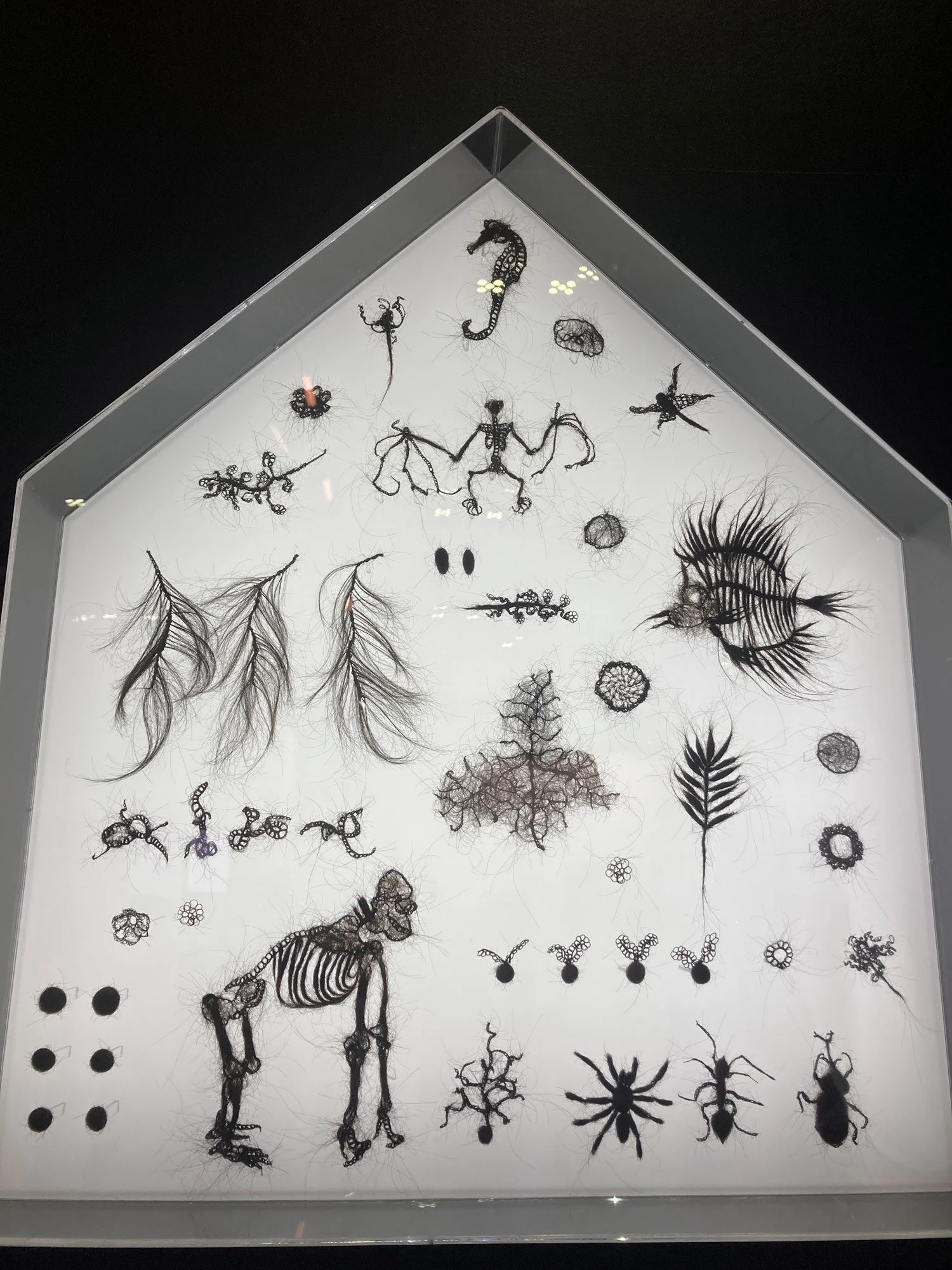
Imhathai Suwatthanasilp. Image taken by me at ArtSG 2026, Warin Lab Contemporary.
I have been following Imhathai Suwatthanasilp’s work for a couple of years, and always marvel at her patience and commitment to the ritual. She has shared on her social media how she knots her hair end-to-end, and wraps it into a spool for crocheting later. Even outside the medium of hair, her practice is steeped in hours of deep concentration, using humble materials such as fly wings to create repetitive patterns.
I discovered Studio Sanne Vissier through her amazing project, Locally Grown (2023), when I chanced upon images of fabrics fully woven from hair. Being Asian, my hair is very straight and smooth, so I had never considered spinning possible to create yarn from hair. Her project really opened my eyes to the possibilities of hair as a material, its immense strength, variety (of colour, texture), and beauty.
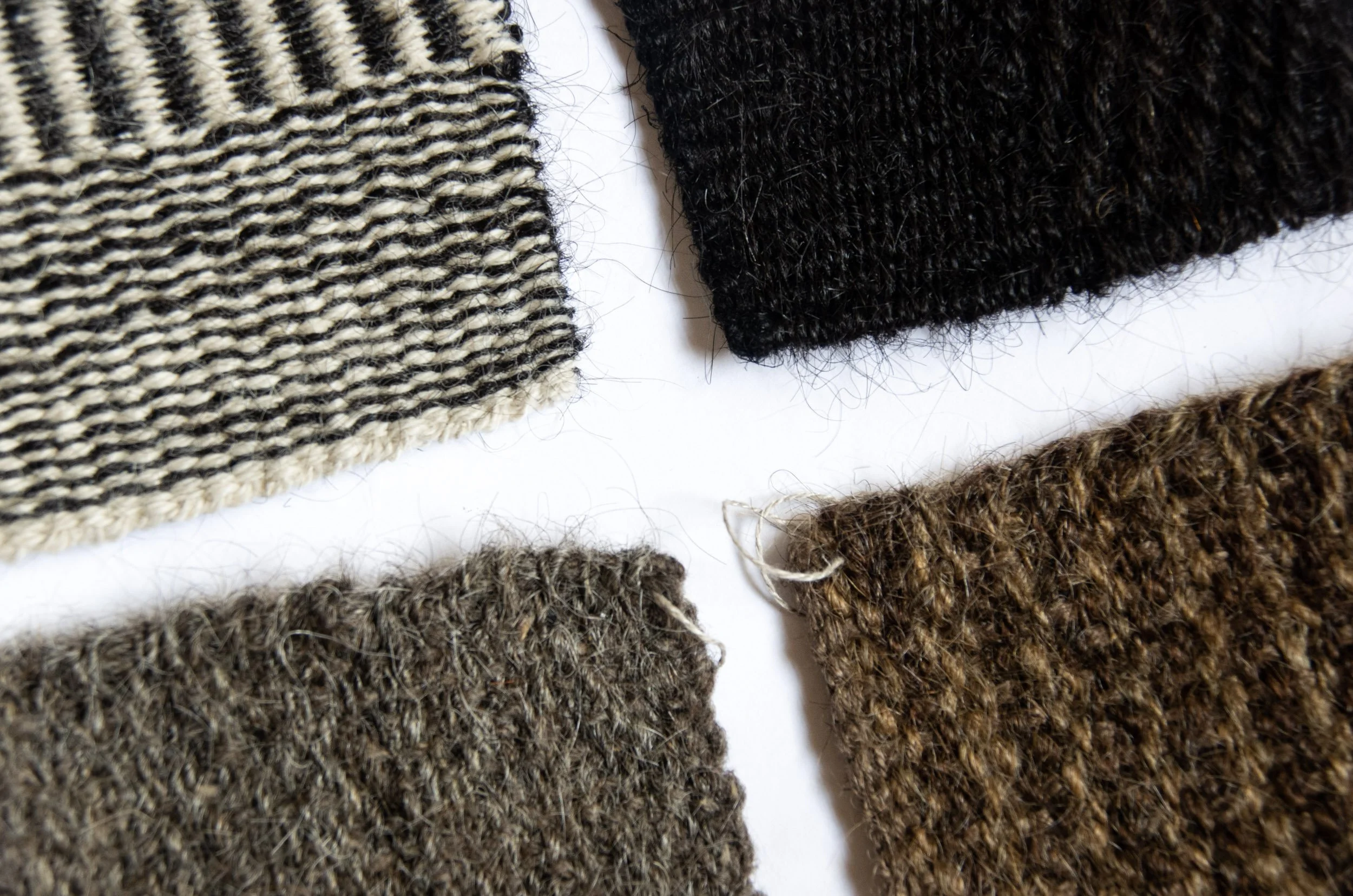
Image of woven hair samples from sannevissier.com
While in the previous three examples, you can see unruly hair ends forming a halo around the object, my encounter with Zen Hansen’s Hair Anthropology gave me an extra angle to contemplate this medium. It was one of those moments where social media became a source of knowledge for me; from her account, I found out about the world of historical hairwork, marvelled at her recreations of jewelry from archived workbooks, and most importantly, realised how it was actually possible to collect and organise your own shed hair in a systematic way. She would arrange the hair so they all fell in the same direction, and even count the number of hairs she shed per month.
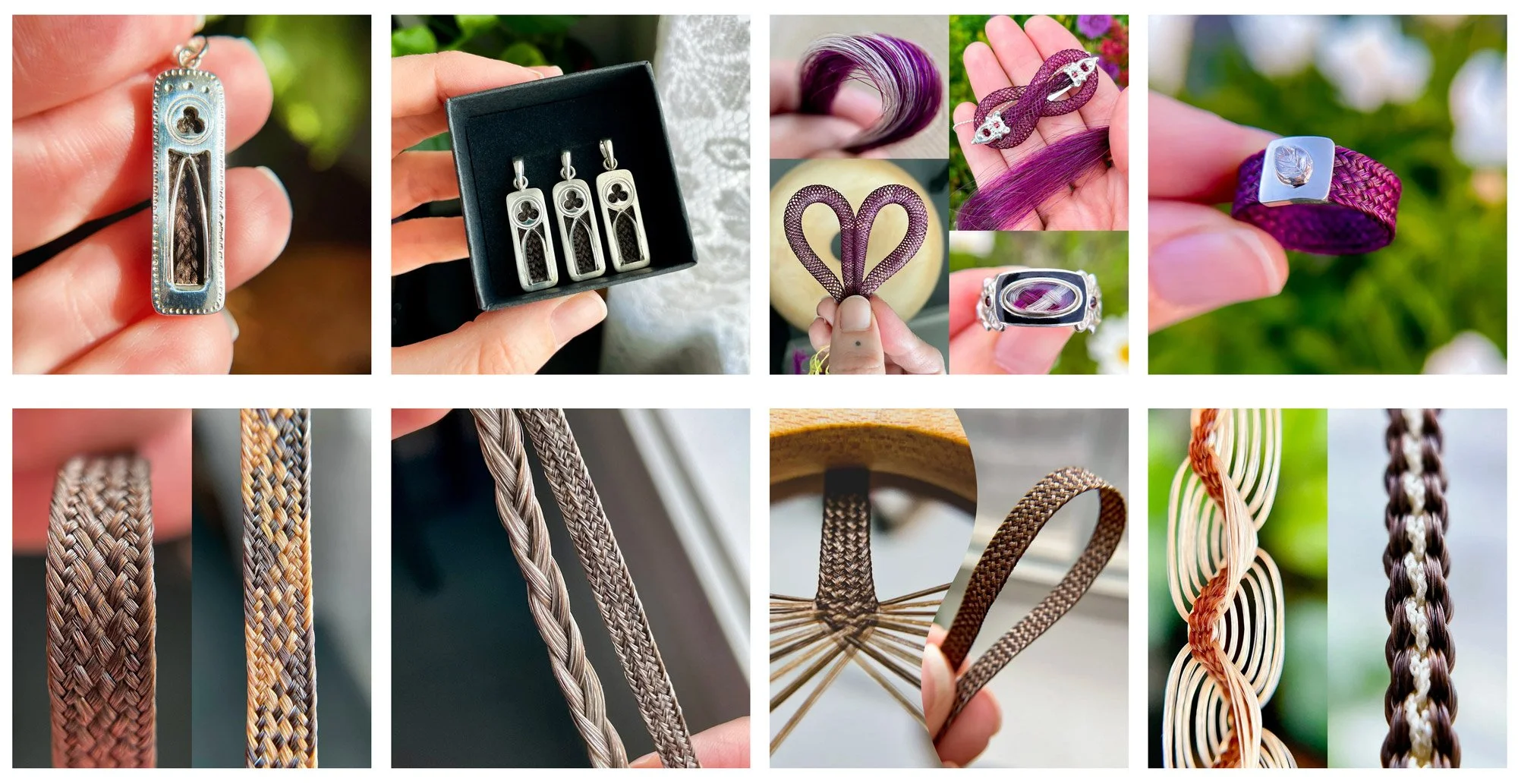
Screenshot of Zan Hansen’s hair work, taken from her website hairanthropology.com
Most recently, I discovered the powerful works of Mona Hatoum, a Palestinian artist who has worked with hair in ‘hair drawings’, sculptures, installation and performance art. I was instantly drawn to Keffieh (1993-99), the fabric used as a traditional headdress by men in the SWANA region and become synonymous with Palestine in recent times.
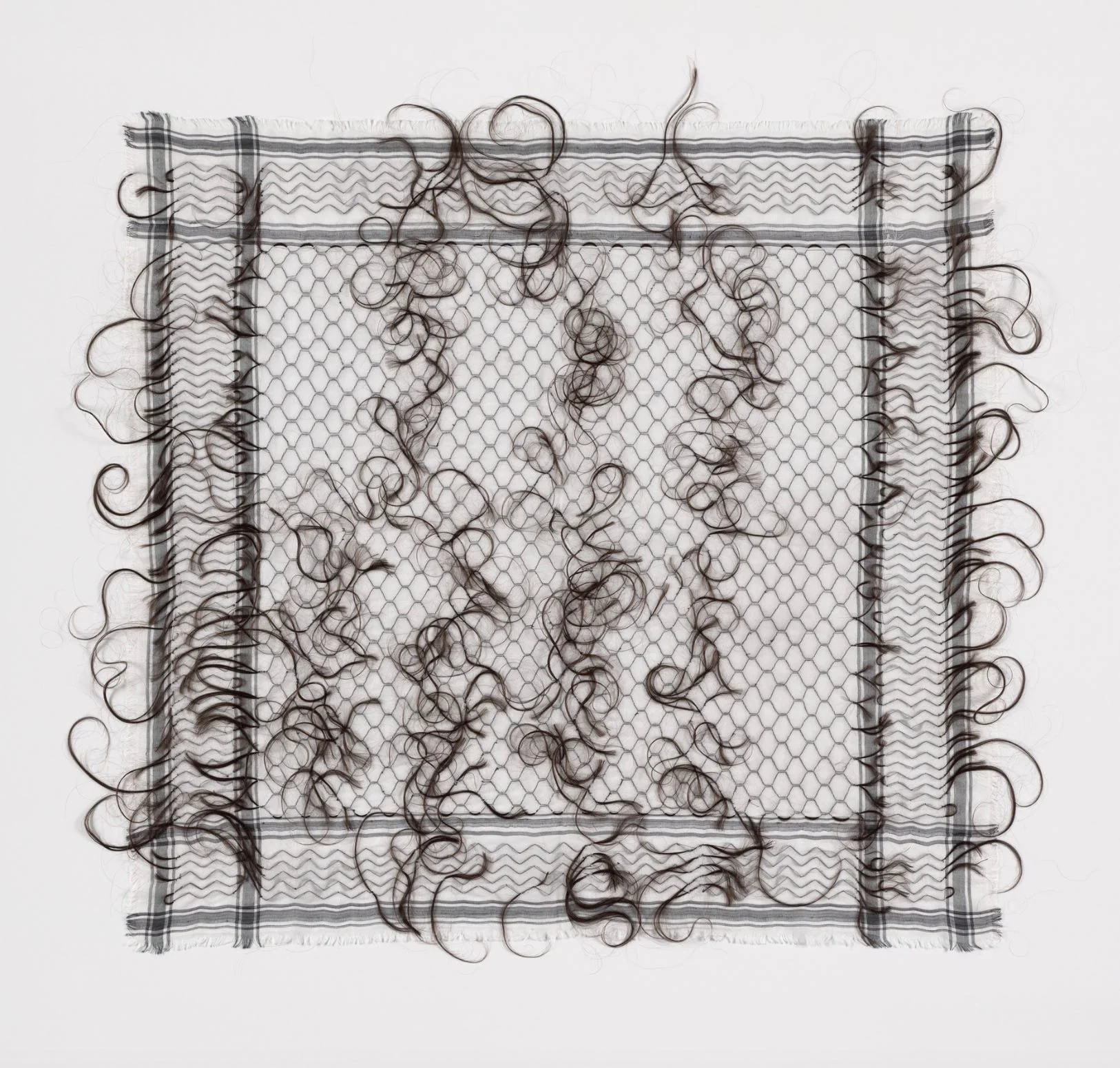
Keffieh (1993-99), Mona Hatoum. Collection of MoMA. Image taken from pulloutyourownhair.substack.com.
Combined with such a strong symbol of resistance, the unruly hair woven directly into the cotton fabric shows its desire to be free from the grid. In works like Hatoum’s and Gowda’s, the identity carried by hair becomes the crux of the artwork.
Hair as Expression
When I was 10, my school had a swimming program. We would all bundle into the chartered buses after lessons in the pool, and you would find a cluster of girls at the back row. There I would be, comb in hand, helping to untangle hair matted with chlorine. My best friend once cried because I worked on another girl’s hair before hers, saying that only I could comb her hair without it hurting.
I have always loved playing with hair. Personally, it feels like an important ritual of care, especially when I am feeling down or ugly. This was the reason I first started braiding yarn in my hair when I felt lost. Working on other people’s hair is always an exercise to make them feel good, and just like when I was 10, show care through my hands. My mother used to spend a lot of time tying my sister’s and my hair in twin tails finished with blue ribbons when we were little, and loved sitting still in front of the boudoir while she got me ready for school. In 2023, I created an artwork called Mother’s Ritual, in which I ‘planted’ fibre into the pores of cactus wood then braided them, mimicking the way my mother tended to our hair.
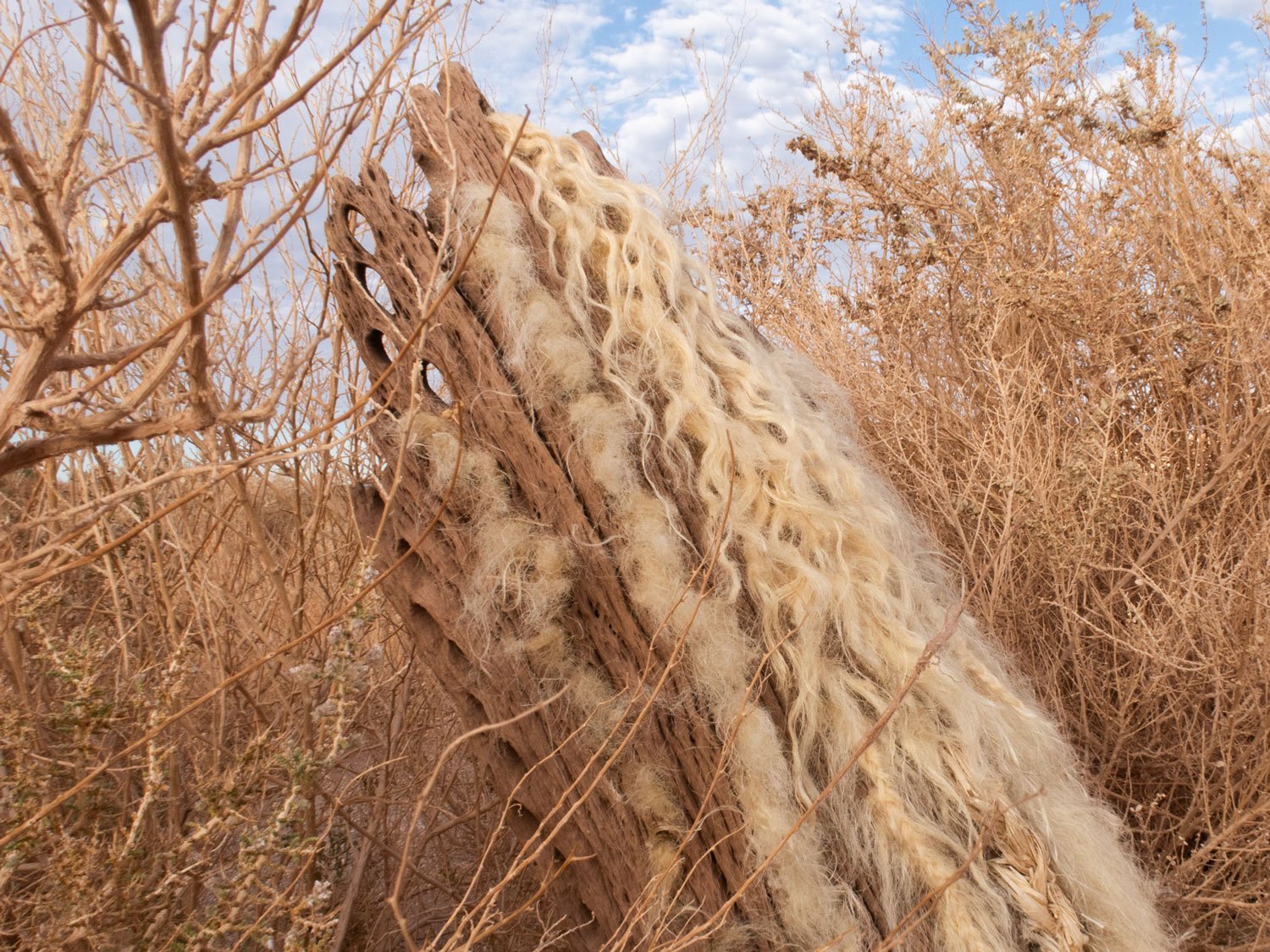
Mother’s Ritual, 2023. Cactus wood, banana fibre, Malva flower
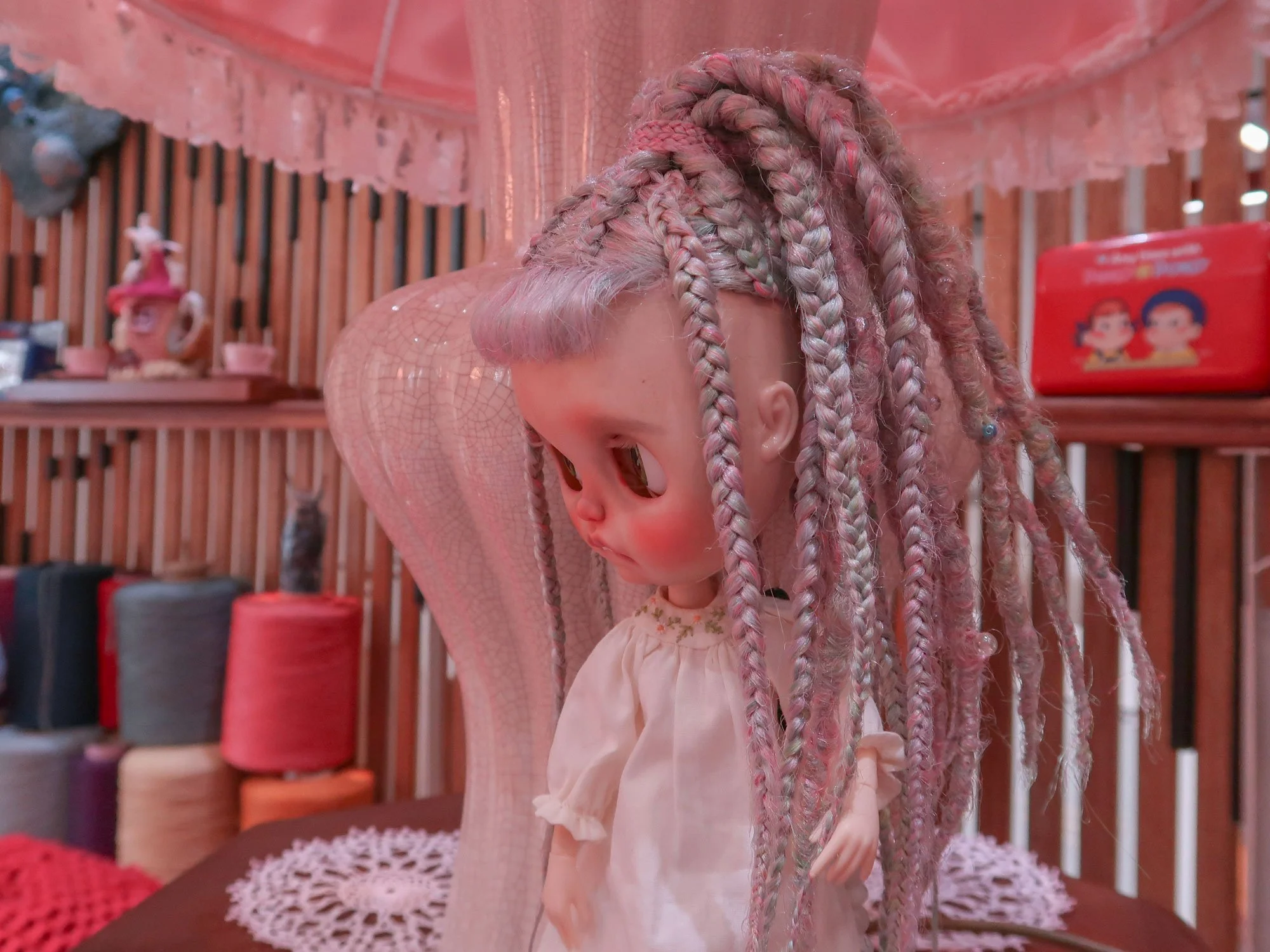
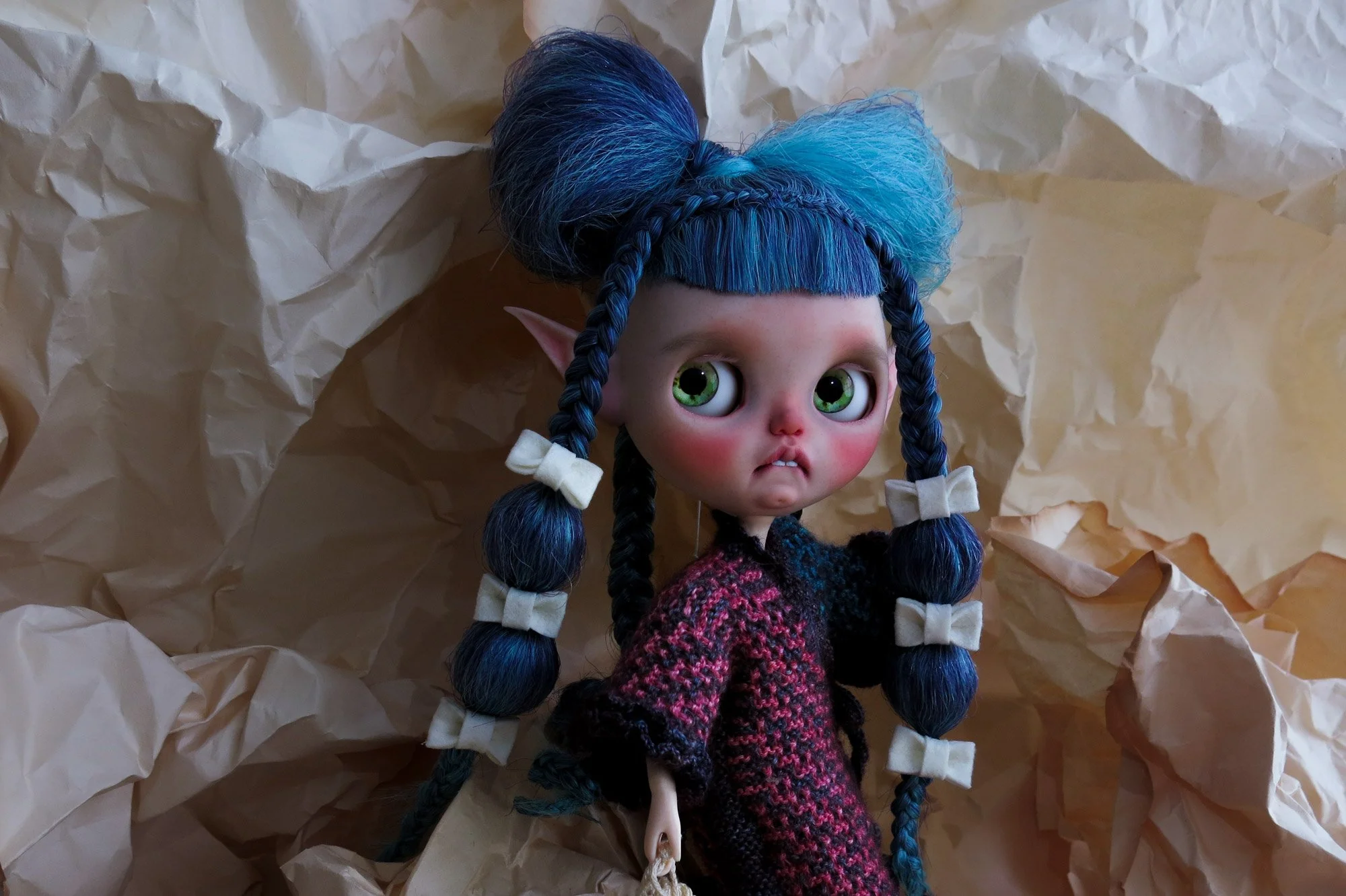
From 2014, I started learning how to braid my own hair, which led to me crocheting and wool-felting my own locs extensions. It had been a long time since I felt so inspired. Crochet and knitting are more technical and structured, so blending colours of synthetic hair and wool was almost like painting on a canvas for me. Being able to wear my own work was exhilarating and I felt my spirit had been reborn.
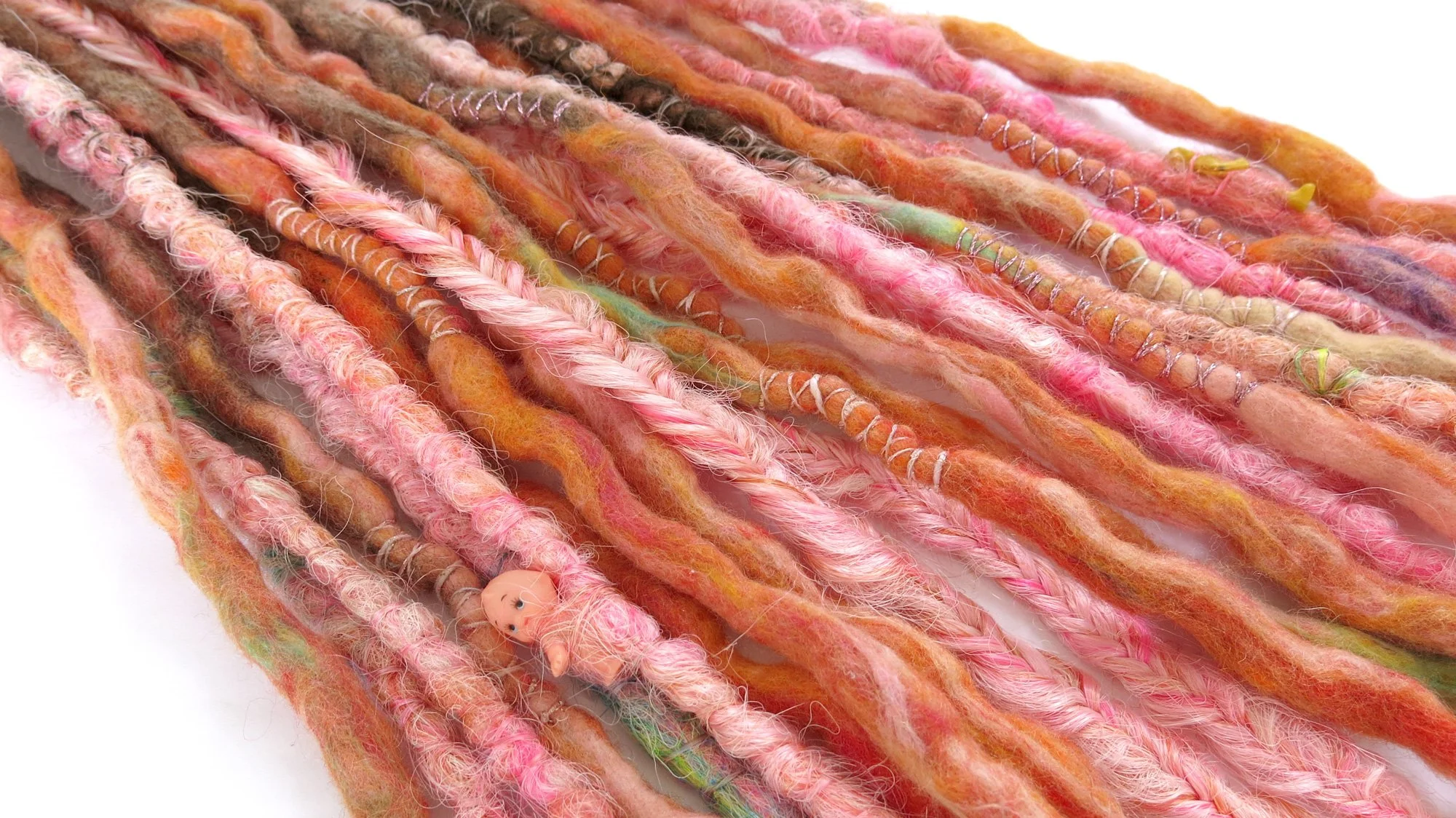
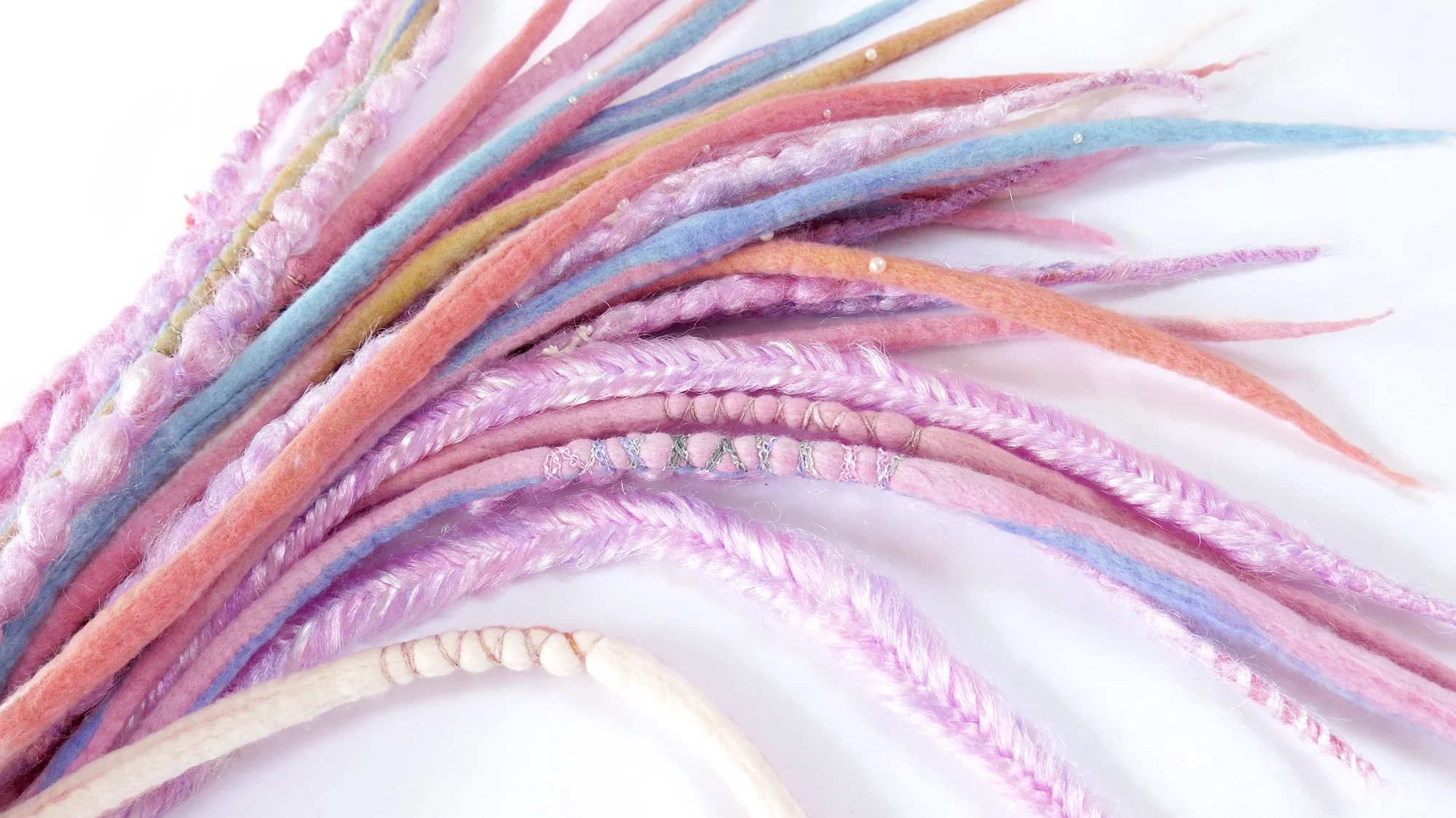
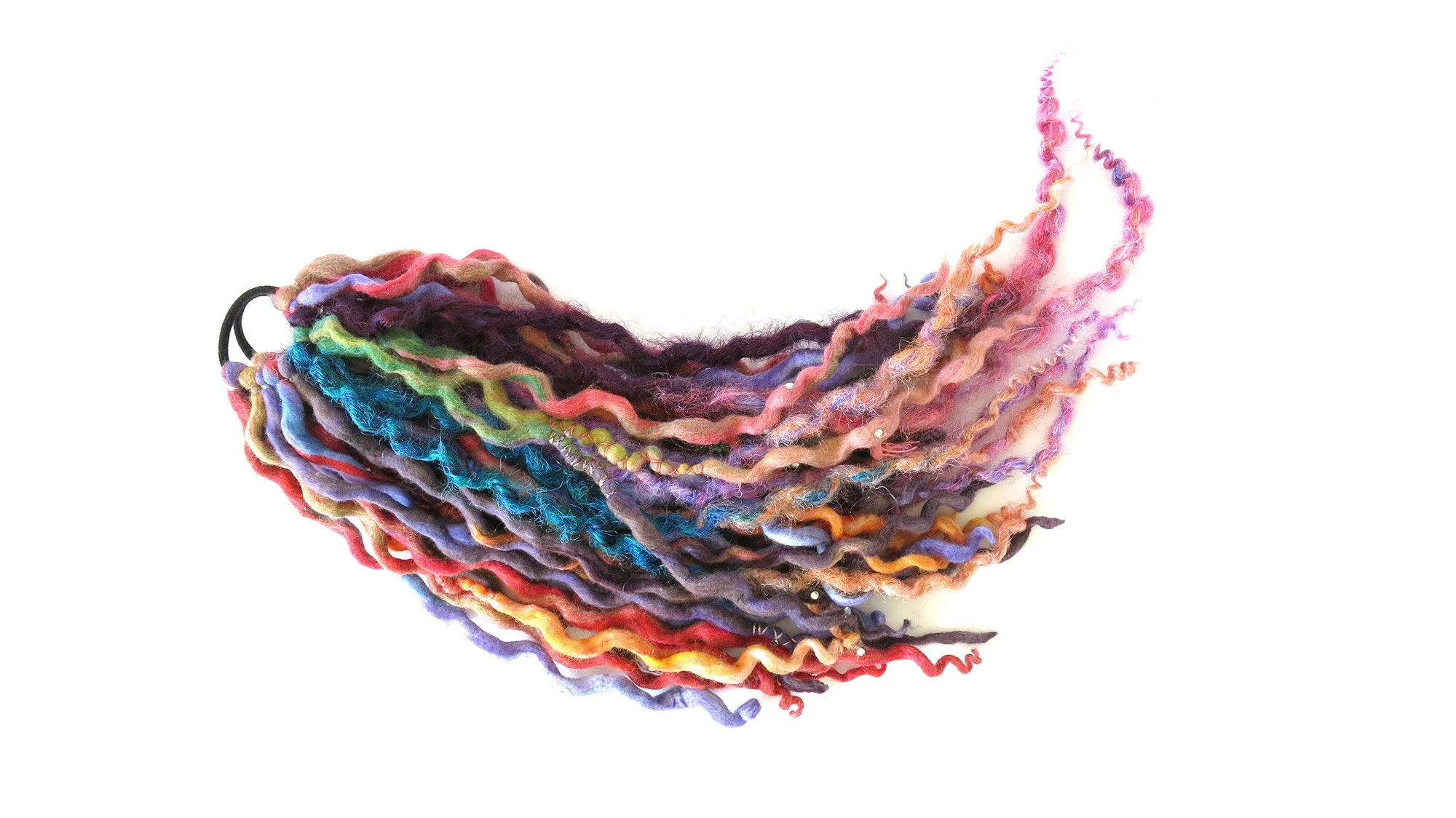
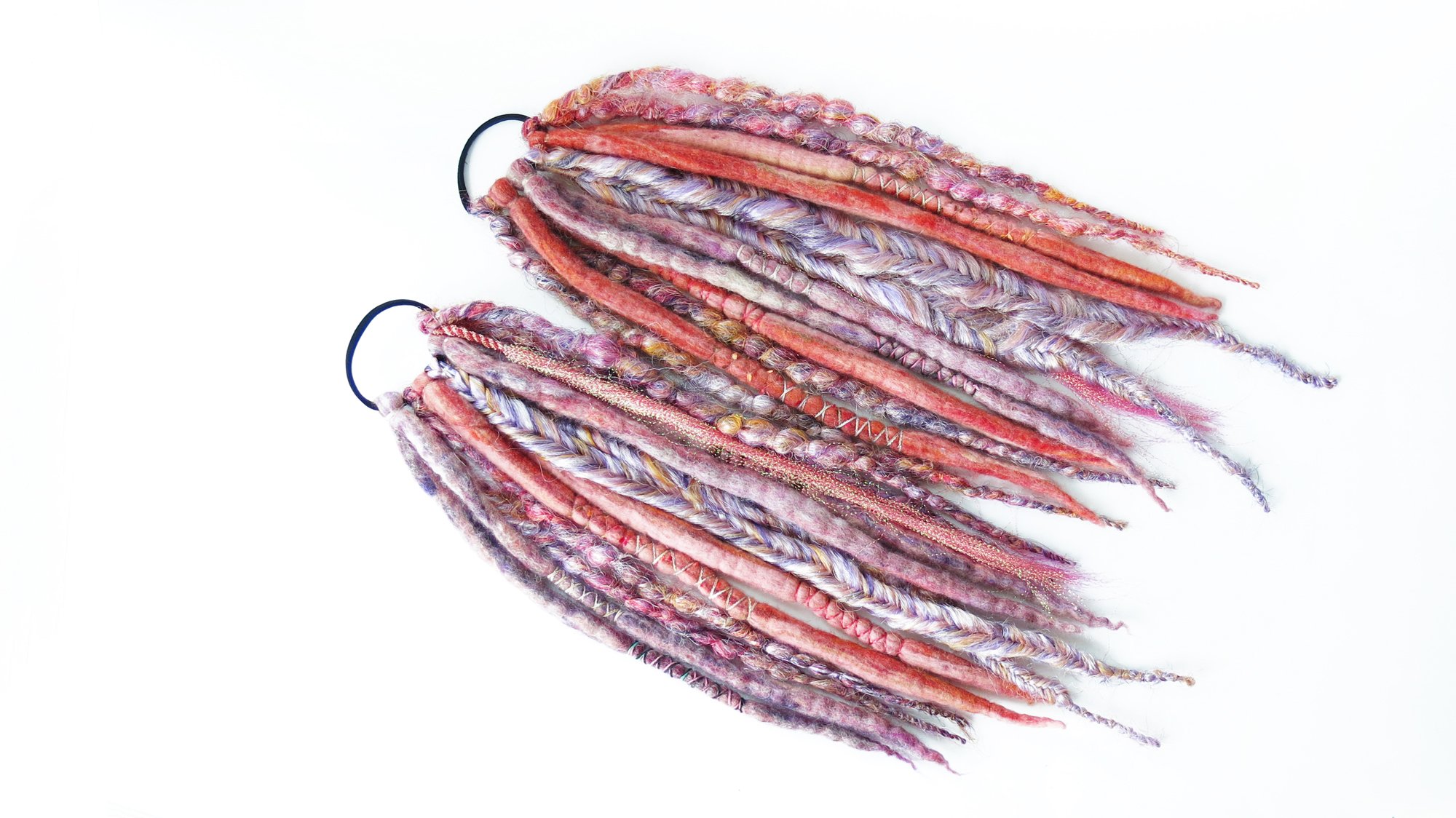
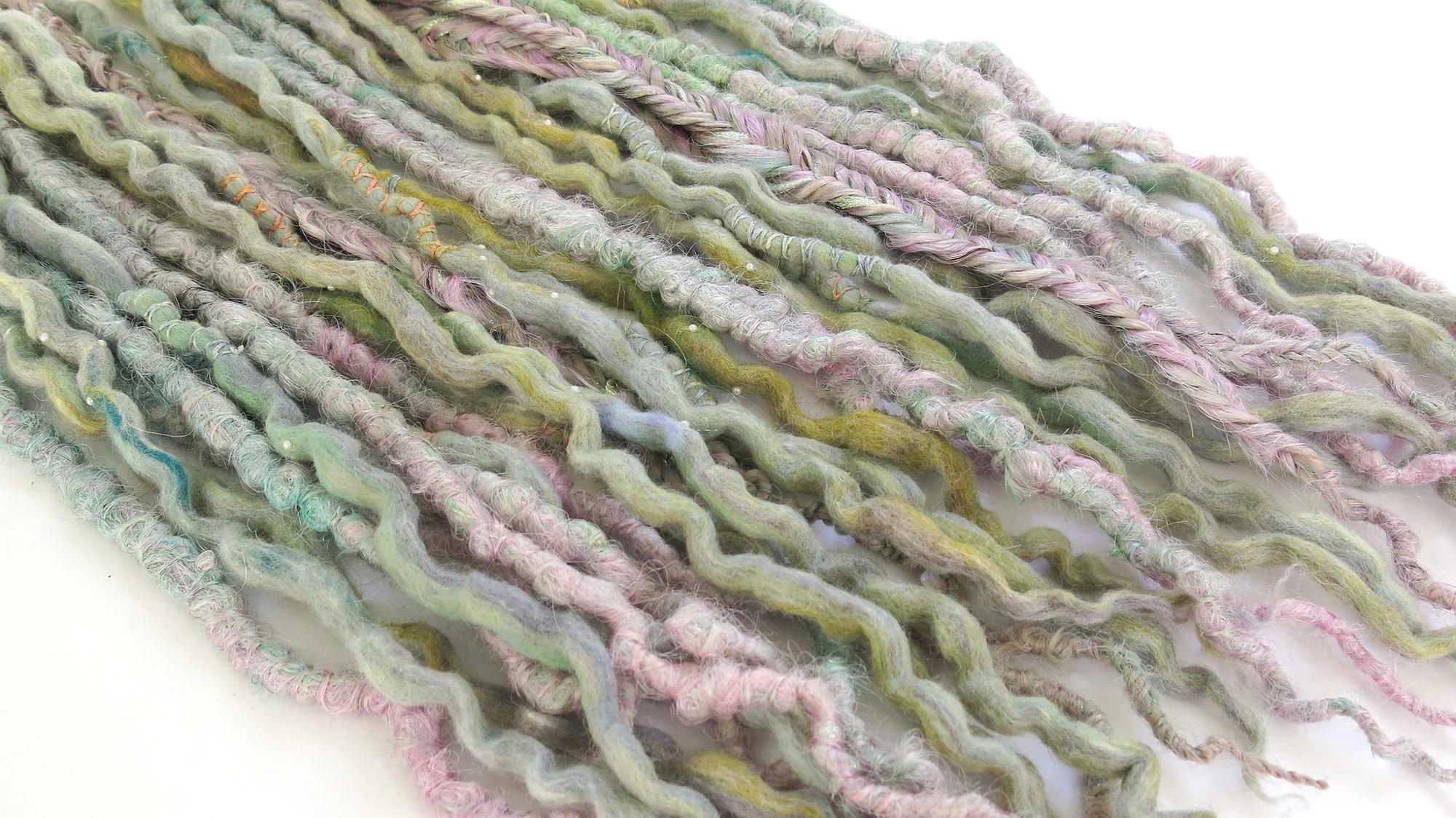
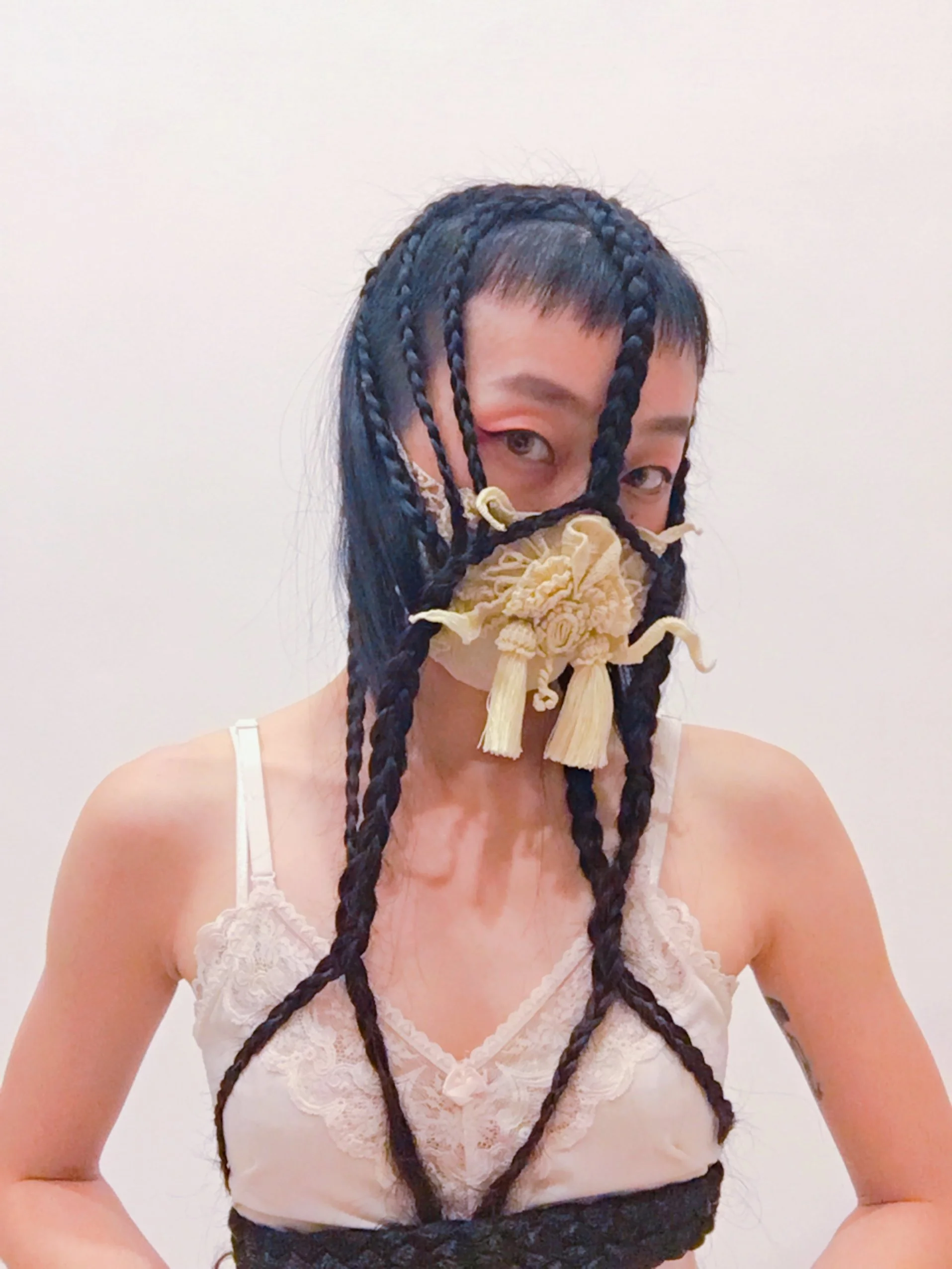
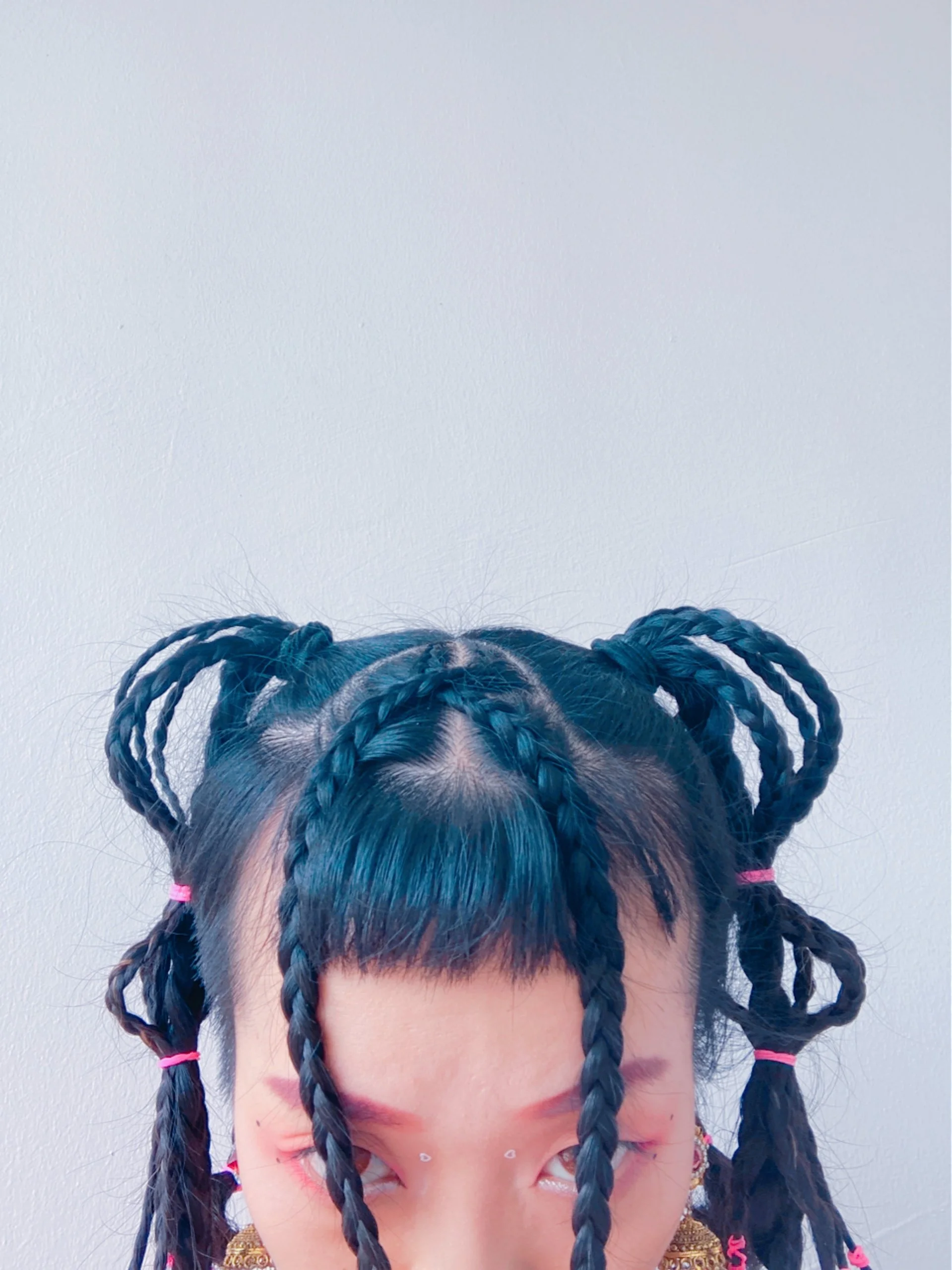
It was not long before I realised an Asian girl with hair extensions rooted in Black culture was not going down well. It was heartbreaking because I found great freedom in this medium of expression. Despite that, I never gave up finding new ways to express myself through my hair, researching on Asian hair culture and simply inventing my own braid styles. I have always seen hair as a medium, though attached to my body—which has its advantages (like when I wear it like an ‘armour’ in the photo below), but also its disadvantages, like being unable to contort my body to achieve certain styles. I enjoyed the challenge of thinking up a new hairstyle for a new occasion. However, I was never particularly conscious of this as an extension of my artistic practice, because it is largely a self-care ritual.
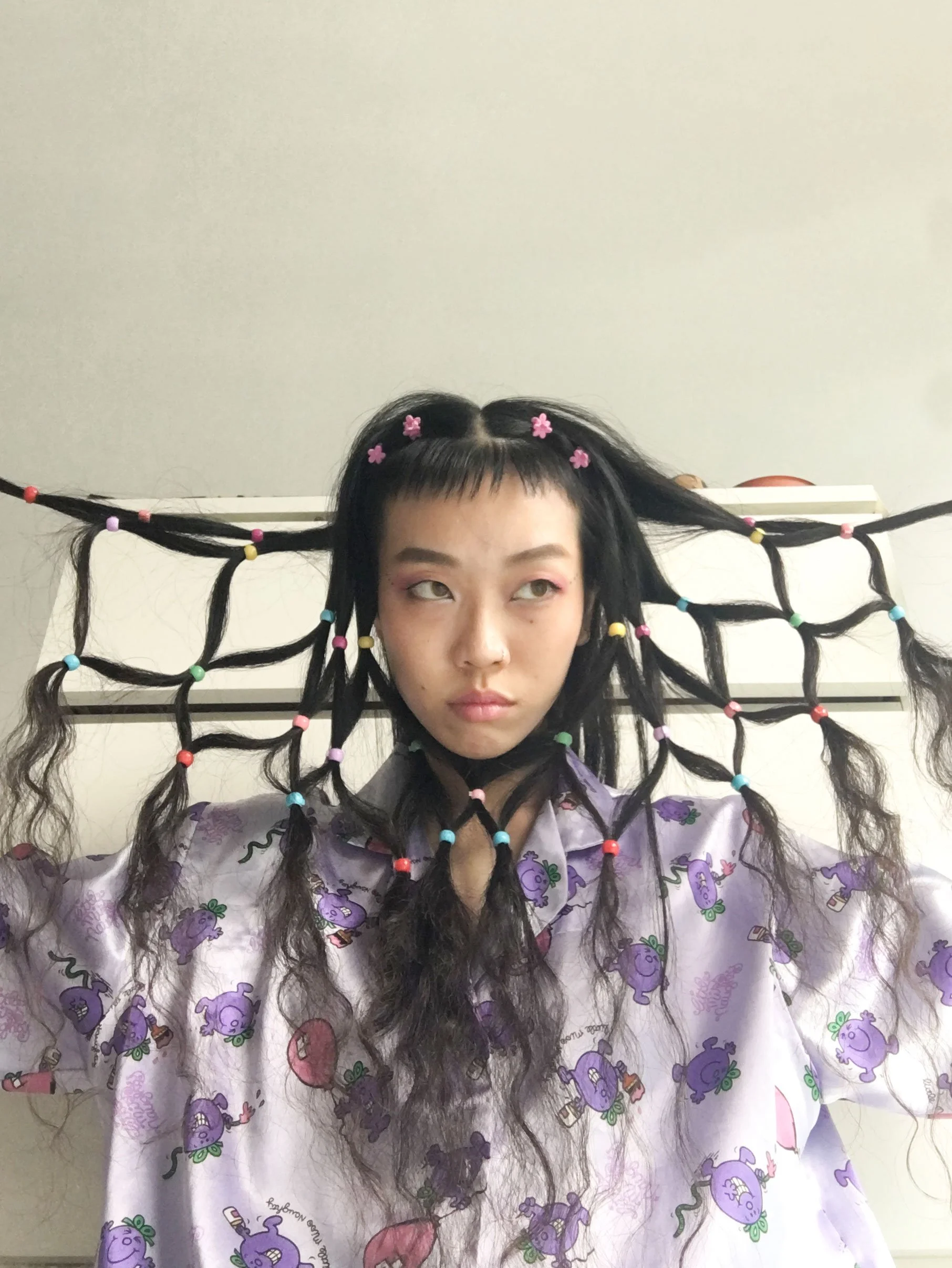
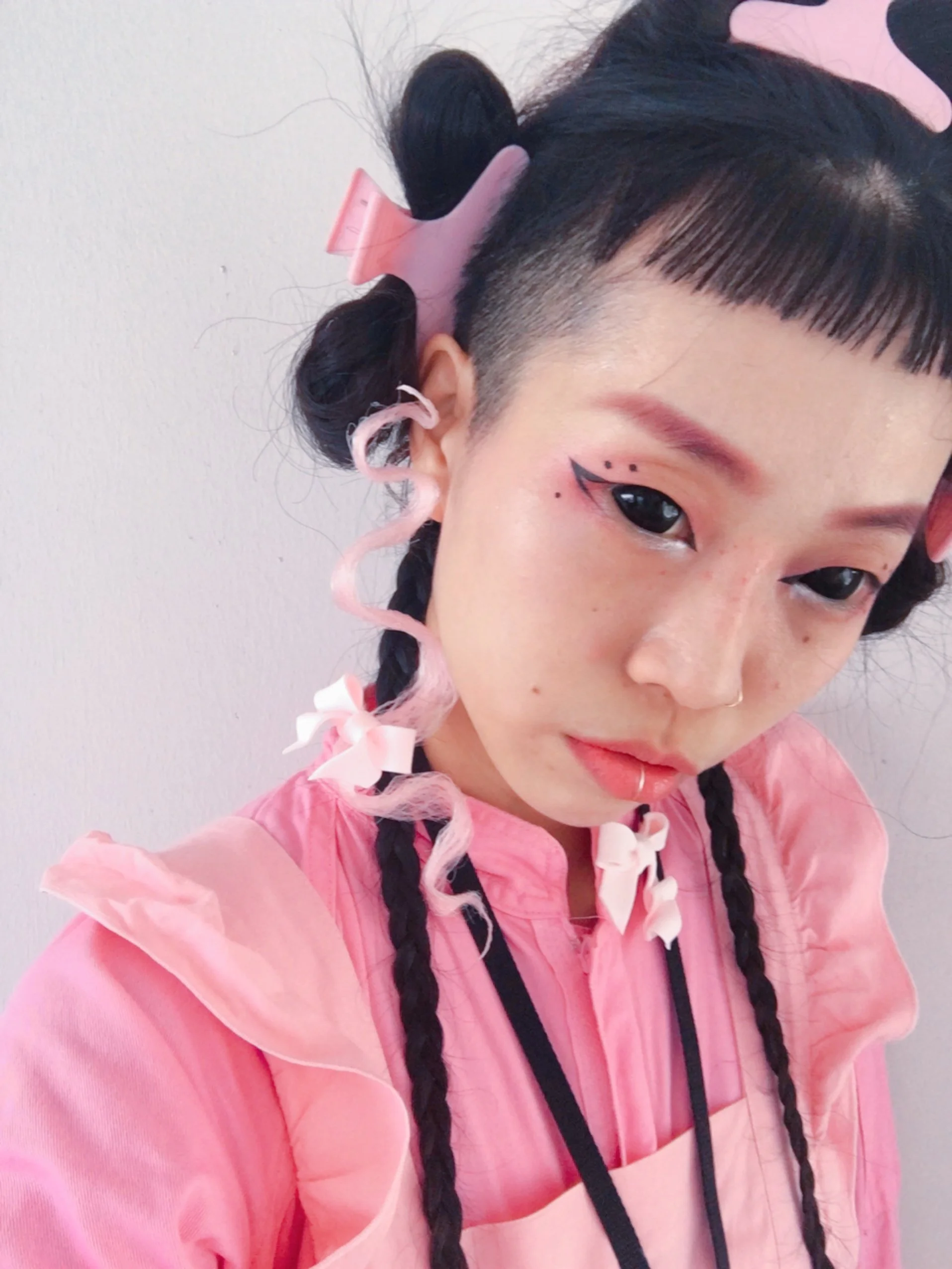
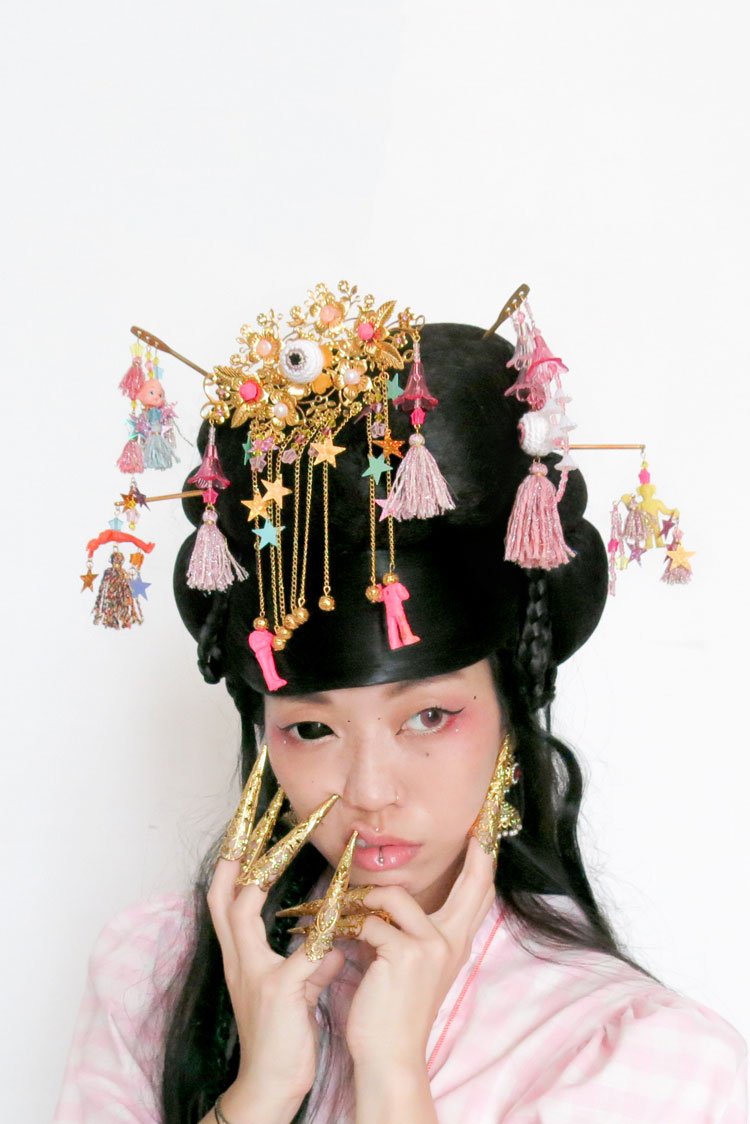
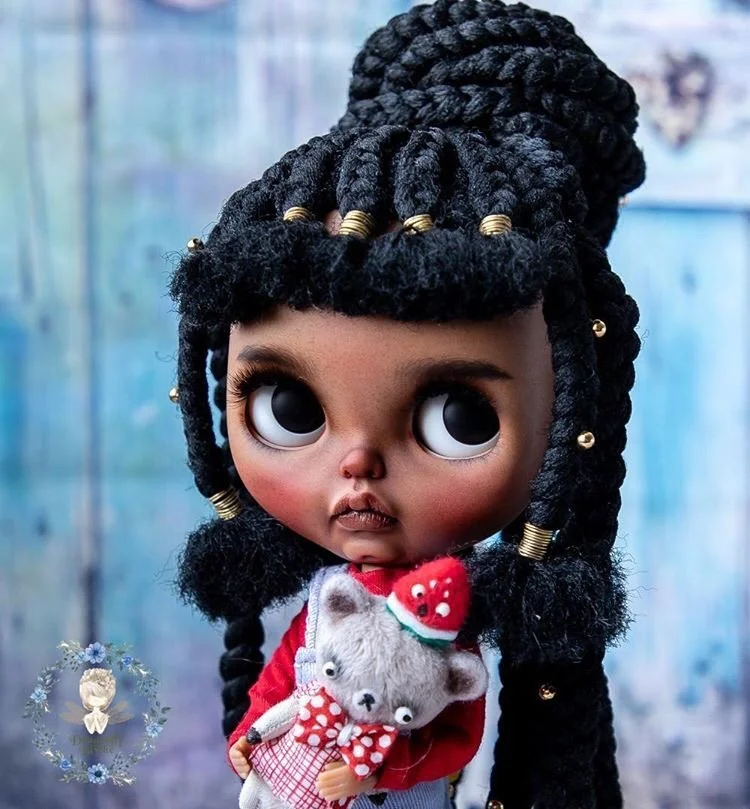
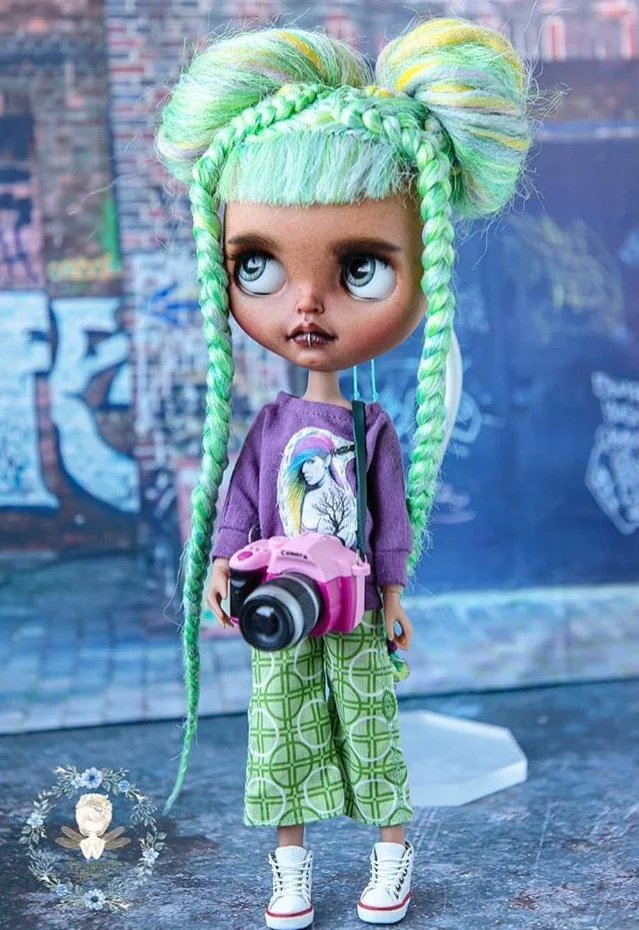
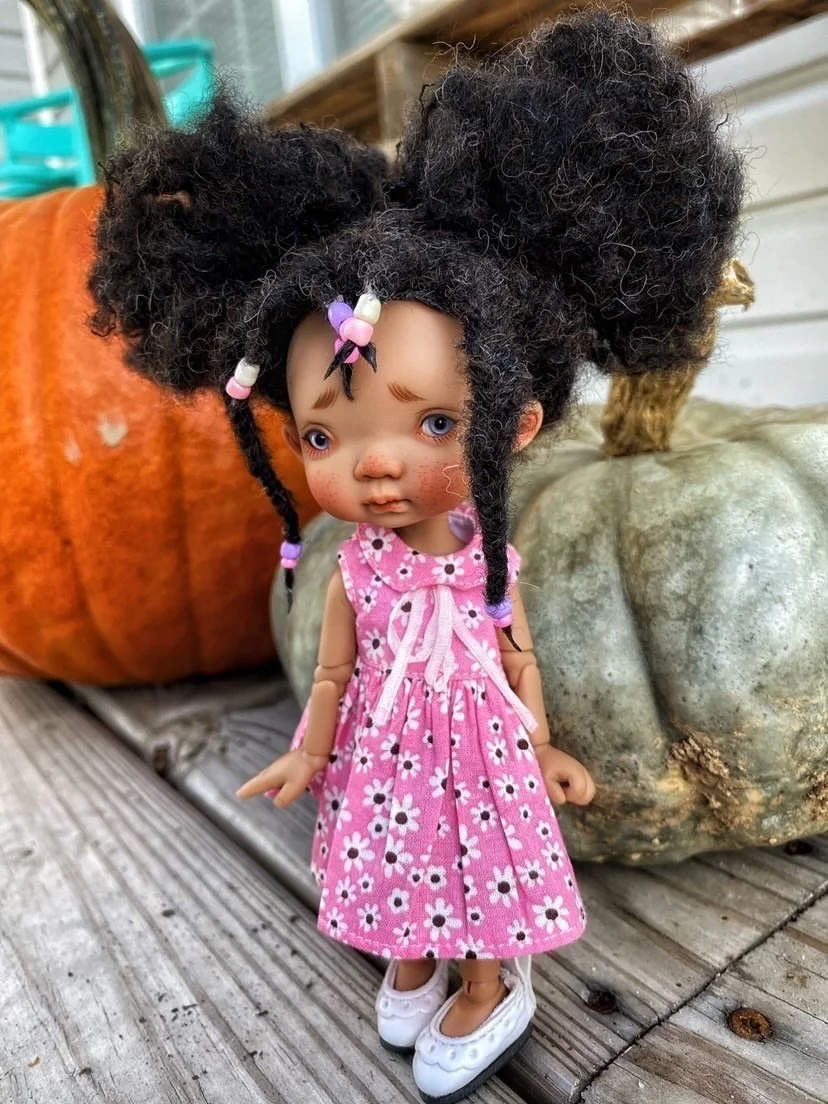
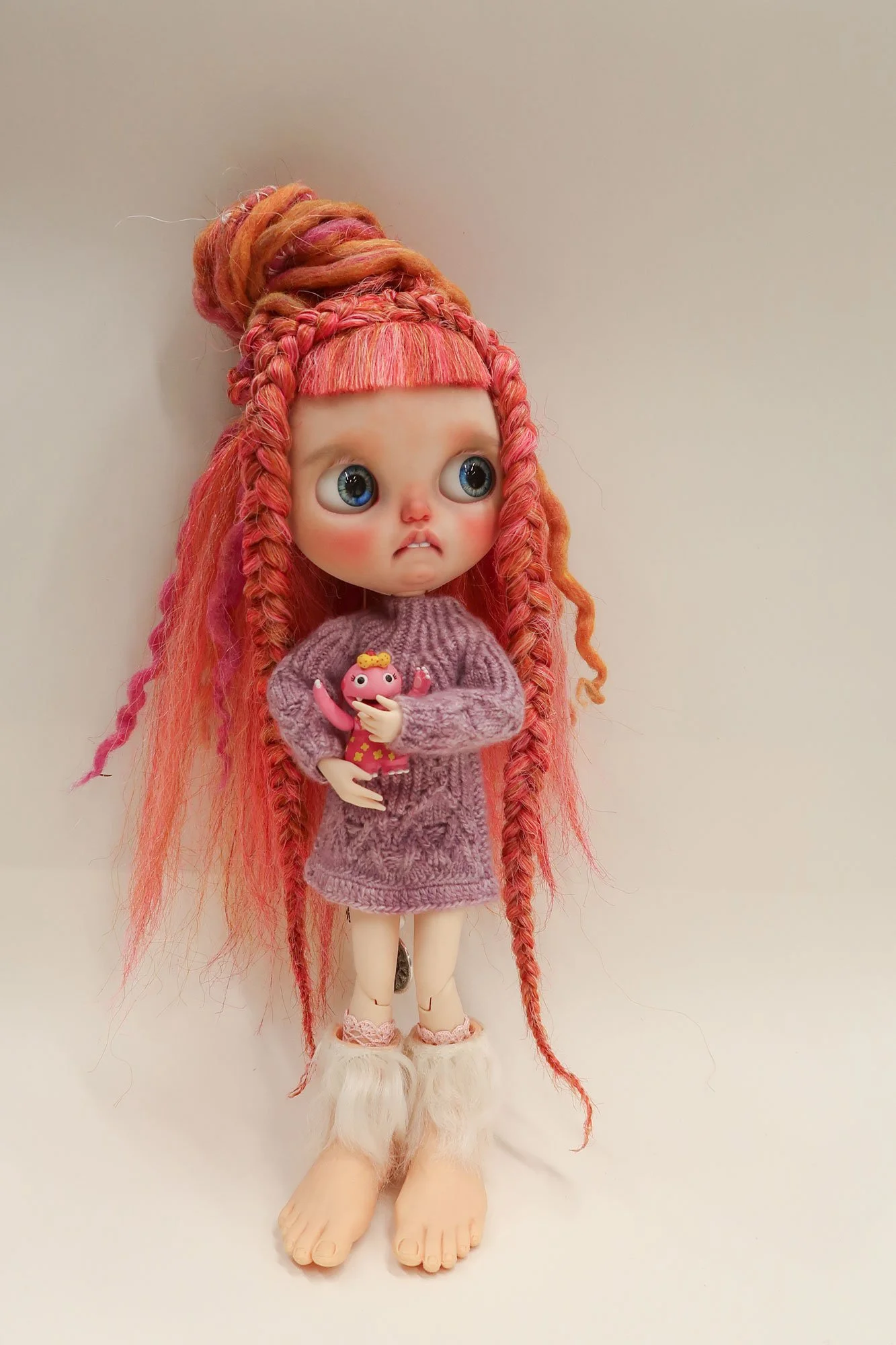
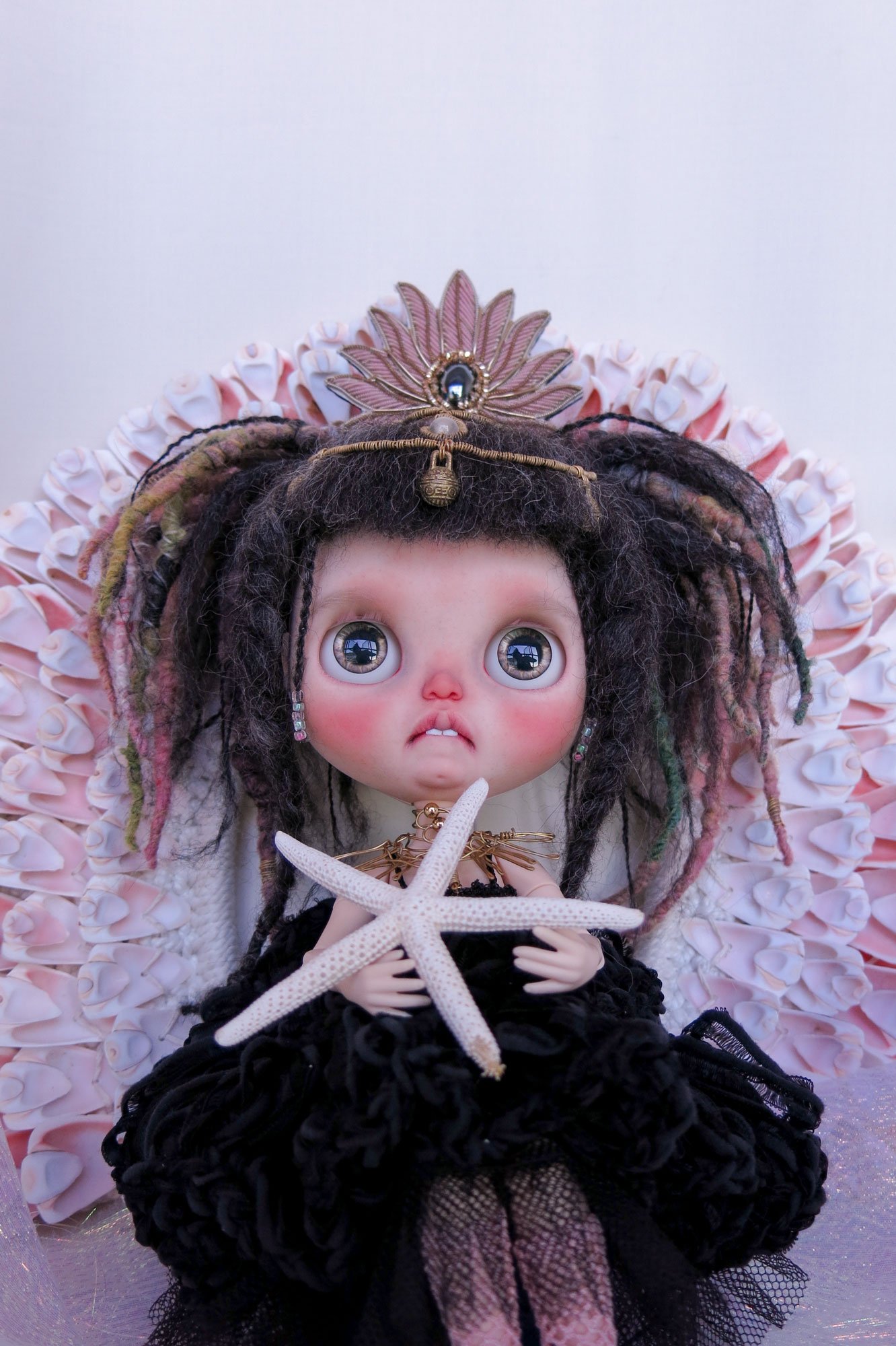
I moved on to making wigs for dolls, because I imagined the doll world would be a lot more accepting of an Asian person creating non-Asian hairstyles on dolls of a skin colour different from mine. In hindsight, I am grateful that criticism pushed me to read up more about the history of hair; most recently, I have been reading WHISKEROLOGY: The Culture of Hair in Nineteenth Century America by Sarah Gold McBride, a book that talks about the impact hair studies have had on issues including racism and sexism in that time period.
Collection as Ritual
I had been collecting my own hair on a non-committal basis for about 2 years before this project even though I had no goal in mind. When I used to wear braids, removing them after 2 weeks resulted in so much shed hair that I worried I was actually ill. No one actually realises how much hair you shed until you start collecting. So I simply started keeping them. At first, I tried taming the strands by twisting them into temporary braids. As time passed, I got lazy and started balling them up—-an incredibly bad idea. I was convinced I could use the balls of hair, and I was not entirely wrong. While it took time, the smooth hair surface of my Asian hair unlike certain wool types, naturally bounced apart. Even in the tightest knots, I could force a needle into the mess and start pulling. The resulting kinky hair could be dipped into water to resume its smoothness. I was amazed by how strong and versatile this material was every increasing minute.
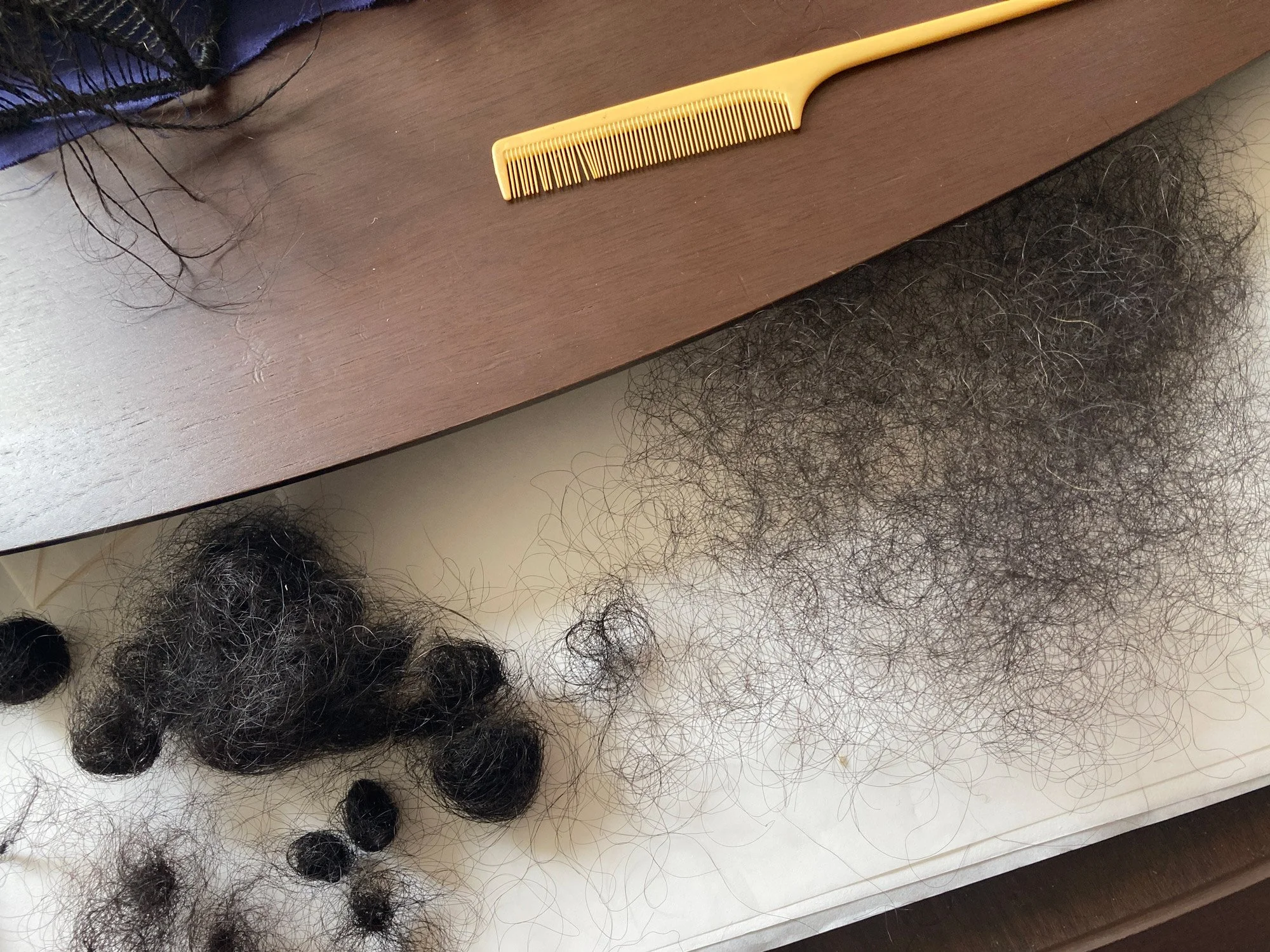
Hair balls on left, untangled hair on right
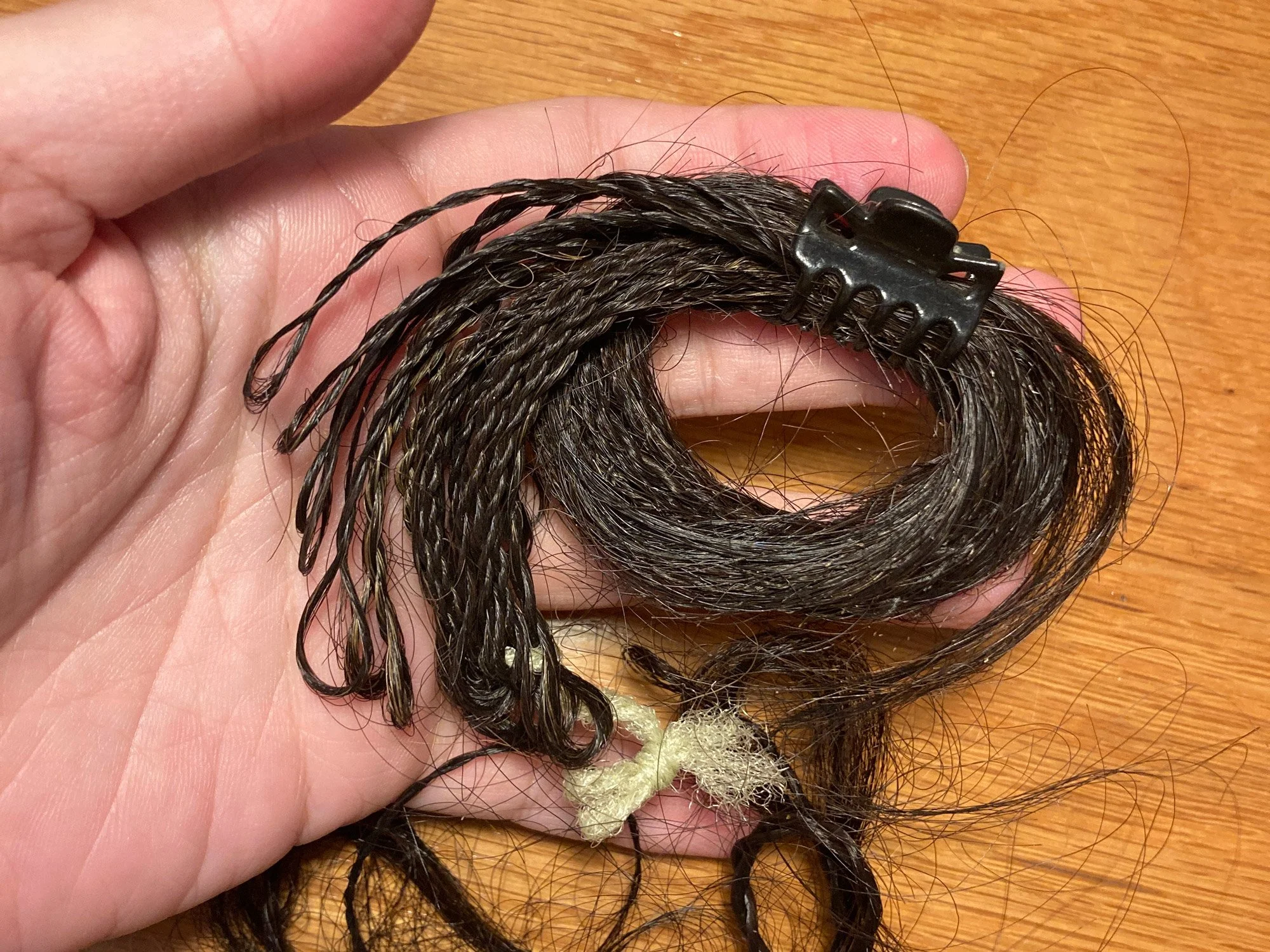
Shed hair twisted into braids
Midway through the project, I ran out of hair. I had been very particular about how I collected these strands previously, only taking those that came off into my hand while I was shampooing (never picking up from the floor). In a desperate bid to complete the project on time, I tried to save every single hair strand I found, as long as it was clean. A large part of the braids in the body of the work was saved within 2 weeks of careful collection.
My rushed daily rituals had subconsciously become more routine than care, and I was glad for an excuse to slow down in the name of work. During the 2 weeks, every strand was like gold; I took an extra long time to shower everyday, carefully finding strands stuck to my skin, arranging them for use. I found myself sitting at the desk, arranging the hairs follicle to follicle, end to end. I started reflecting on how hair was a calendar, its length replacing numbers. I observed how 2 years ago my hair strands were thinner; found a bunch of lighter brown strands that might have been the last of my bleached hair in younger days. It was an exercise in remembering, an excuse for nostalgia, a different way of meeting myself. I fantasized about the day I could start making artworks in white, how that could literally show time passing and growth.
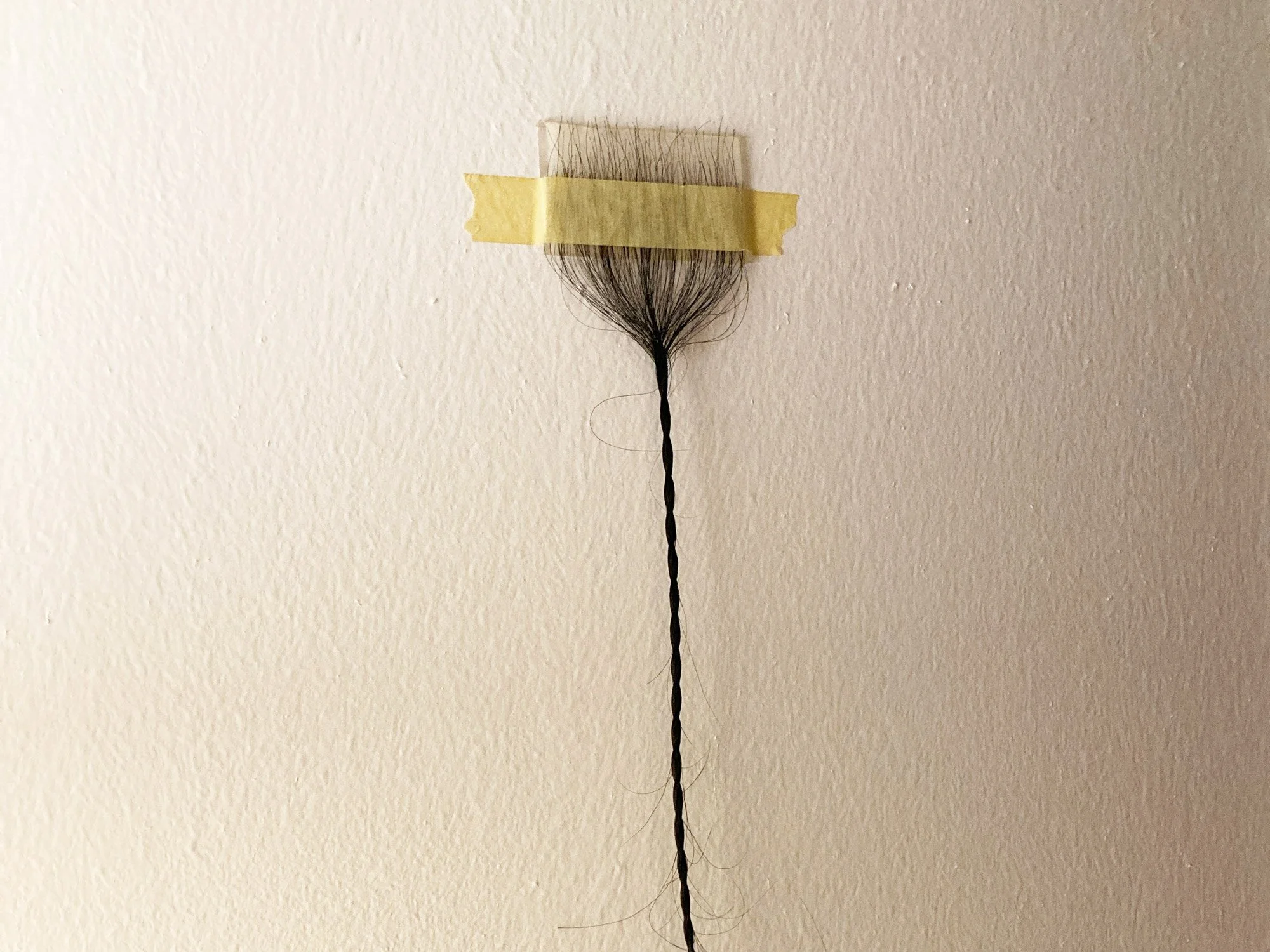
Strands arranged with the follicle ends together
I knew crochet would not be my technique of choice. I was certain this was where my exploration with my own hair and braids could merge into my art practice. However, due to the open structure of the ‘box’, using the hairs cuticle-to-cuticle (so they would resemble the natural way hair falls) was impossible (due to the absence of a scalp). In my experience with synthetic hair, which is exactly the same on both ends and much longer than my natural hair, I often folded the strands in half with no issues. However, with natural strands, the cuticle end (which also ends in a visible, white follicle that many might be grossed out by) would stick out, unwilling to be tamed. With synthetic hair, many methods like using hot water could work—-with real hair, a new bag of tricks must be learnt. In the end, I decided that the rebellious ends made the work look even more realistic; simultaneously brinking on disgusting.
Soft Power: Fragility as an Armour
I first realised the might of ‘soft power’ from a yarnbomb installation I did in 2017. I had crocheted a ‘spider web’ over what turned out to be the emergency fire exit of a building. A friend pointed out how I might accidentally kill someone by trapping them in with my ‘web’; guiltily, I went back a few days later with a pair of scissors to remove it. As I snipped at the yarn, someone started yelling, “Stop! Stop!” Looking up, I saw an old lady glaring at me over the parapet of the neighbouring building. “It’s ok, I’m the artist!” I yelled back. “I know you are,” she replied, almost defiantly, never changing her tone of fury, “and it’s all good being there.” I was so confused. It turns out this ‘web’ had prevented people breaking into the building and going to the rooftop for illegal activities.
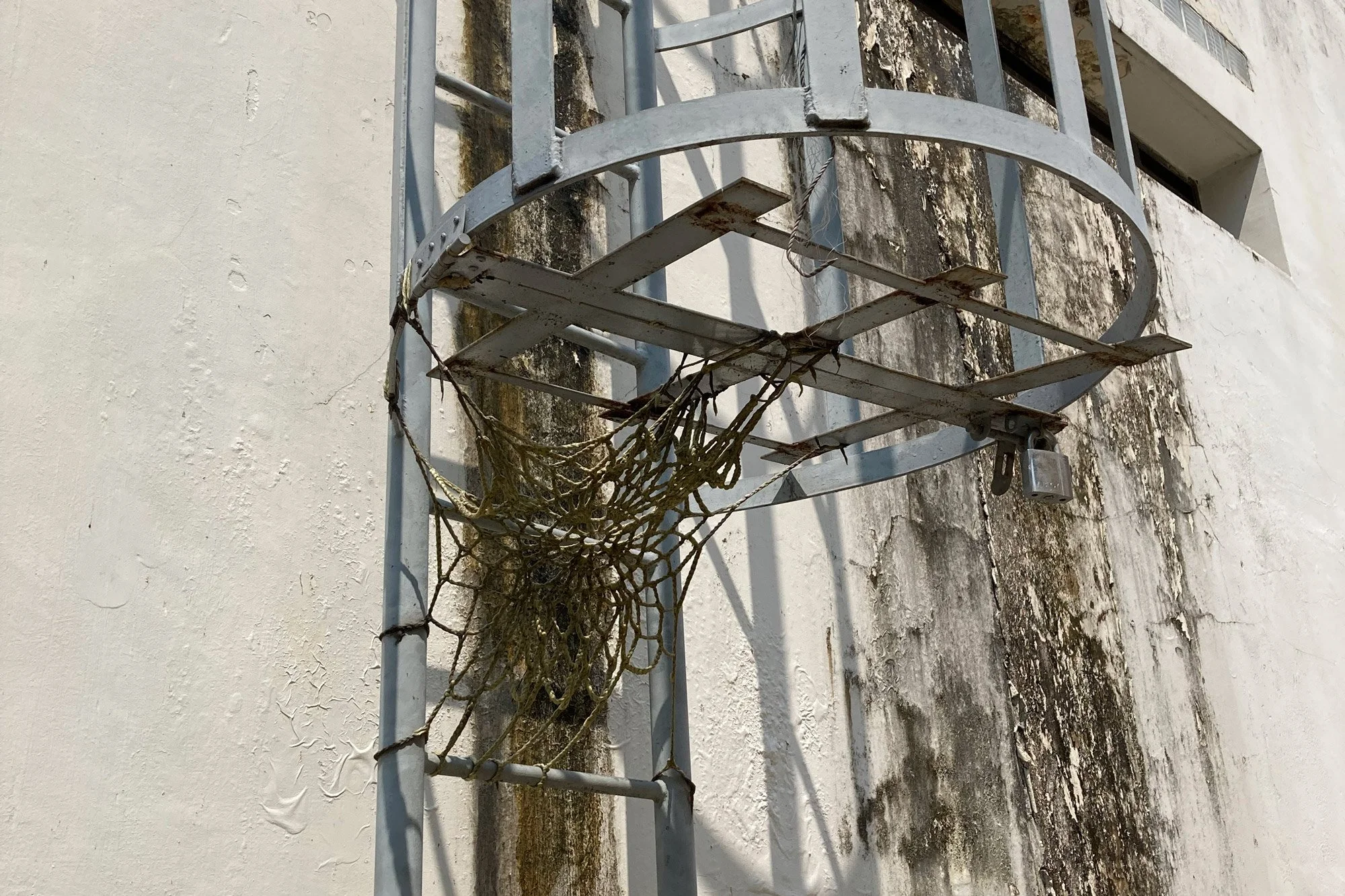
Photo taken in 2021, of a crocheted web installed in 2017. It has completely changed colour, from yellow to grey.
Perhaps soft power provides even stronger protection that the tough. Thick chains. Chunky padlocks. And people still find ways to break through them. A crocheted web? Perhaps it had simply grown so dirty that people developed a revulsion for it. But its fragility might present a duality: so easy to break through, yet too precious to destroy. I maintain a belief that ‘sacrifice’ is not simply the loss of something but an exchange; beyond tangible objects and material goods, there is a sacrifice of a part of your humanity in that act of deliberately destroying something that embodies time and life—including human lives.
The breaking of glass, tearing up paper, ripping fabric— these might seem easy to do, but what justifies that act against a defenceless object? Looking at how our world now faces destruction in so many ways, I would argue that that this temptation to destroy grows with each act to slowly blot out a person’s humanity, making one forget who they are. Once you cross that line, destroying bigger or more precious things become easier.
Luxury of Choice
The artwork is named for the 5 JPY10,000 banknotes ‘floating’ within. At the time of writing, the Japanese Yen, which has been on a downward slide the past few years, has already depreciated by at least 10 Singapore dollars. I have always had an interest in currency—-pieces of paper that have been ‘authorised’ to hold value. The artwork is deliberately priced to match the banknotes within, which renders the rest of the work ‘worthless’. I have always found each individual’s differing perception of value very interesting. Having grown up in the middle class of a city where money speaks, its value (and not what it can buy) has been deeply ingrained in me from a young age. Lee Kuan Yew, Singapore’s first Prime Minister summarises the natural inclination of our middle class quite well:
“[The middle classes] have been poor of so long they automatically stash any increase in wealth in the bank or in their pillowcase. They spend only when they feel very confident about the future... Poor people still behave like poor people even when they are getting rich. You just want to accumulate more wealth and have more savings because you have been poor for so long, you’re afraid you might become poor again.”
In making this work, I wondered if one would willingly destroy what they know is hours of hard work, hair that had been collected over time, just to get the usable money inside. What is the value of craft, time and hard work to the sandwich class, where trading hard-earned dollars for luxuries are just within reach, those given the mirage of social mobility if they just work a few more hours, spend a little bit less?
And what are those same things to the lower class, where luxuries are but an illusion, where life is simple; where working with their hands is the only thing they know? I would argue that they have more freedom to appreciate Nature’s gifts of time and craft.
In my practice, I have always liked presenting the duality of a subject, forcing one to take an alternative perspective. In my Unbecoming series, I used destruction to question why a ‘broken’ vessel rose in value as ‘art’ compared to a perfectly-crafted piece, turning from ‘worthless’ to ‘priceless’. For JPY50,000 (SGD414.94), this ‘destruction’, or at least the possibility of being handed the permission to destroy, makes one question where value lies to them. In order for this conundrum to make sense, I had to price the artwork at the same value as the money within, which is arguably affordable. Yet, it also comes with a very unique set of terms and conditions.
Many times, when an artwork is resold, its value rises, so much so that the art world has become familiar to the term ‘flipping’. Simplifying this equation is a straightforward condition: that the Collector has to agree to re-exhibit the Artwork whenever the Artist requests so, and that it will be up for sale at an additional JPY50,000—-which goes back to the Collector.
The Collector, Artist and Gallery
Part of the artwork forces an interactive ‘performance’ between the Collector, Artist and Gallery. While these three parties have always had a relationship, it has hardly been plain or easily understood. It is important in this work that the Collector never makes a ‘loss’ (in the event of a re-sale) so the ‘choice’ (to keep or to destroy) of what they place value in retains its integrity. Thus, this work shows that the ‘losses’ are to be absorbed by the Gallery and Artist, since it is not possible that all parties receive JPY50,000. This is not uncommon in the art world; the question is, what does the Gallery and Artist receive in exchange for this ‘sacrifice’ of money?
Considering that the Collector decides to destroy the artwork to retrieve the banknotes—-and it is within their rights to do so—-the destroyed part of the work is seen as worthless. Thus, as a fair exchange, the Artist receives another ‘worthless’ thing: the recording of the act of destruction. One might be reminded of the folktale in which a man eats a plain bowl of rice while sniffing the aroma of meat from a nearby vendor, who later demands payment since the man had imagined eating the meat. A wise man then gets the vendor to hold out his hands while the man holds out a coin; the shadow cast from the coin lands in the vendor’s hands as payment.
Should the Collector, Artist and Gallery all act out their parts on this stage, the entire play forms part of this artwork, and contributes to its value. In the end, this artwork uses the power of an invisible, intangible ‘value’ to nudge people into action while questioning the idea of ownership. The Collector agrees to be in temporary ownership of an artwork that is worth only JPY50,000 if it never changes hands. Yet, if they loosen their grip on it, they might become one of the many owners of a more valuable artwork. The Artist never gets to keep the artwork after it leaves them the first time—-yet they exercise an eternal power over it, in having created it, then ‘owning’ what destroys it.
This artwork is more a thought experiment than just a sculpture; it is an abstract of society’s perception of value and ownership by forcing the involved parties to act out certain roles.
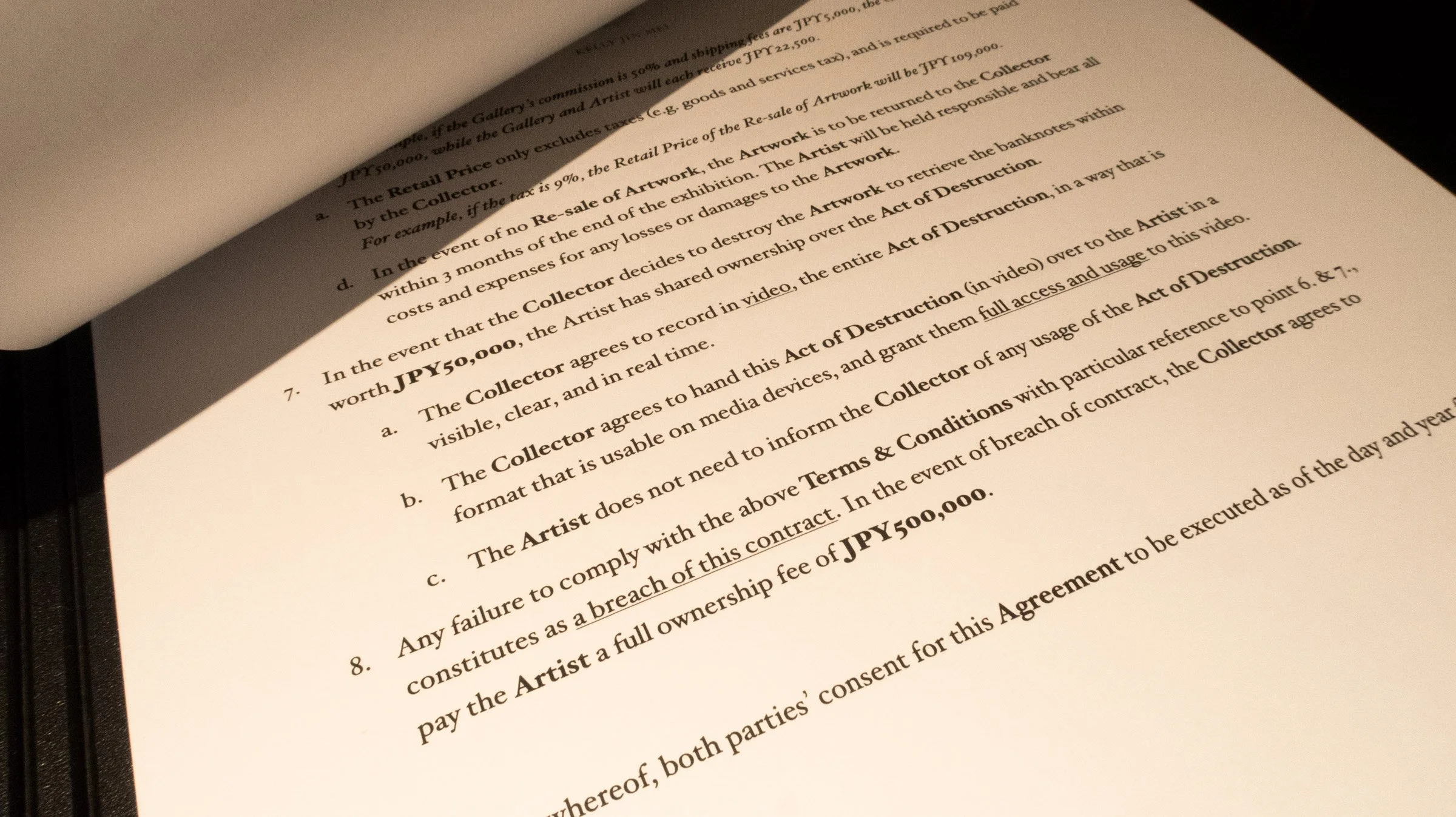
A section of the Agreement, which is part of the artwork JPY50,000 (SGD414.94).