Text by Kelly Jin Mei
In this exhibition titled HAKO(はこ)held in Kotomath Hyogomachi in Takamatsu (Japan) from 24 March - 19 April 2026, 6 Singaporean creatives: Chong Wah (graphic design / graffiti), Wu Yanrong (painting), Kelly Jin Mei (sculpture), Siah (interactive), Gravy Baby aka Carmen Chen (culinary) and Ken (drinks) were invited to respond to the theme, “BOX”. View the Exhibition images here.
The eternal attempt to understand and determine the mystique behind someone’s behavior is what gives “Personality Tests” their unwavering appeal. “Imagine a cube,” one begins, “its size, appearance, and where it is in relation to yourself.”[1]
No two answers seem to be exact. Regardless of its accuracy, one thing this test proves is that a seemingly basic object can take on countless iterations. Now, replace the cube in that question with a “box”. Must it still have 6 sides? What is its shape? How large is it?
While each of the participating creatives expresses themselves in a different medium for this show, they hold one similarity: their past experience spans various disciplines that inform their current practice. Considering the exhibition site in Takamatsu, Japan, the exhibition is named HAKO(はこ) (“box” in Japanese). The choice of writing in Japanese Hiragana is deliberate: the phonetic characters are less definitive than the Japanese Kanji, with a seemingly fluid boundary that inspires various interpretations of this platonic form.
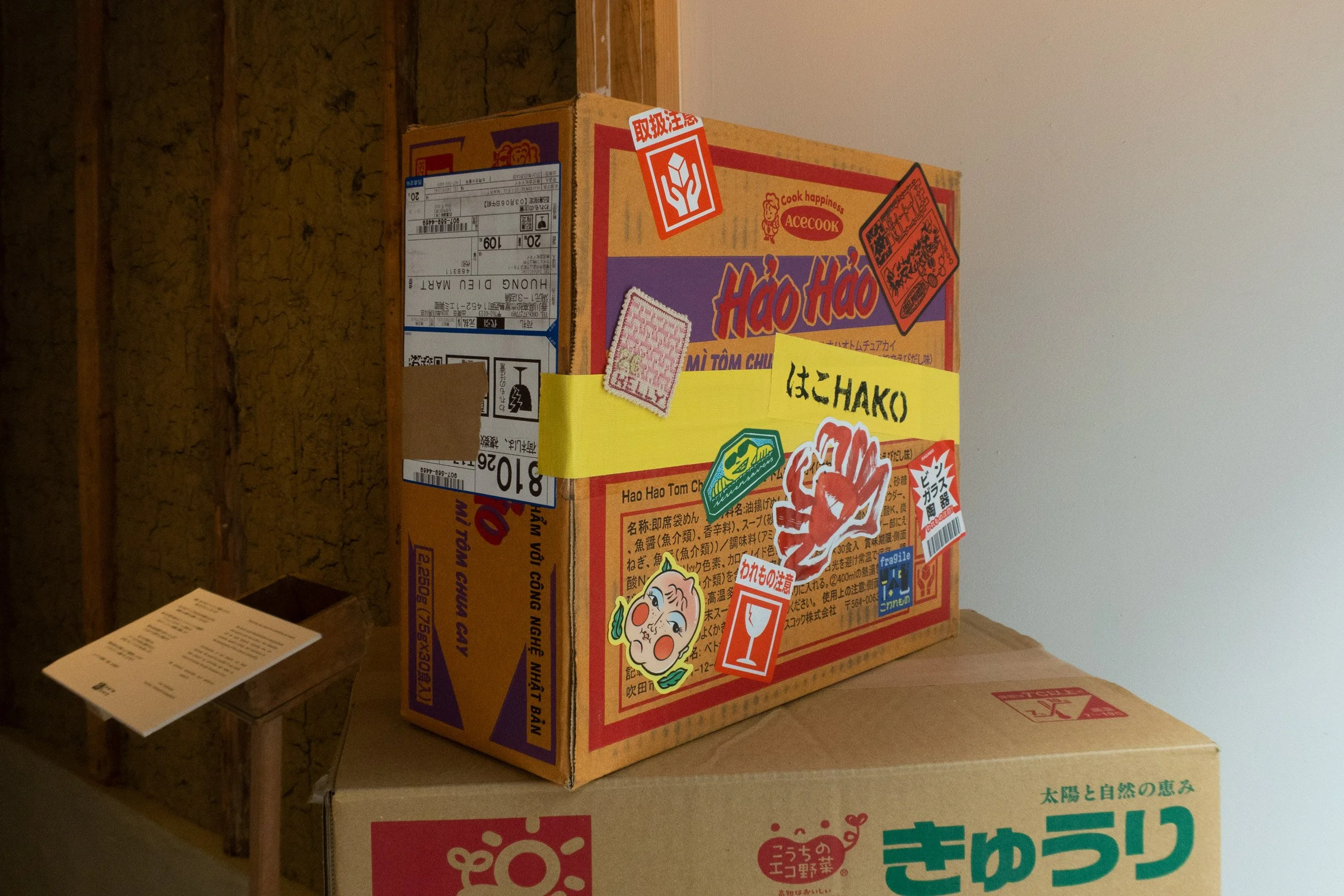
A locally-sourced cardboard box, branded with stickers from each individual creative
運ぶ。仕舞う。込める。宿す。
To move. To keep away. To contain. To house.
Boxes, in their functional form, are ultimately vessels. While they exist to contain or protect their contents, they also keep their contents from knowing the world outside. Boxes are metaphorical boundaries that can be drawn and reshaped; wide as a nation, small enough to fit on your palm. They could be flimsy and disposable; more valuable than that which sits within; invisible but strong enough to motivate behaviour and ascribe identity. They could even develop meaning only after they have been opened, or only if they remain closed.
Reshaping Functionality
Incidentally, the box has always held a special place in Japanese society since historical times, redefining what could be known as “packaging”. From those in everyday uses such as the bento-bako (lunch box), to the lacquered tomobako (accompanying box) bestowed as a form of respect to the aristocracy, the Japanese Box extends far beyond its function as a vessel, becoming a symbol of Japanese craftsmanship, culture, and philosophy.[2]
A box, housing knowledge
For many children in the 90s, encountering our first PC (Personal Computer) was magical. The decidedly dull-looking grey box housed whole new worlds; as we grew up alongside technology watching the form of that box transform over time, it has become almost an extension of our bodies, similar also in the way few of us understand what makes things tick beneath the surface.
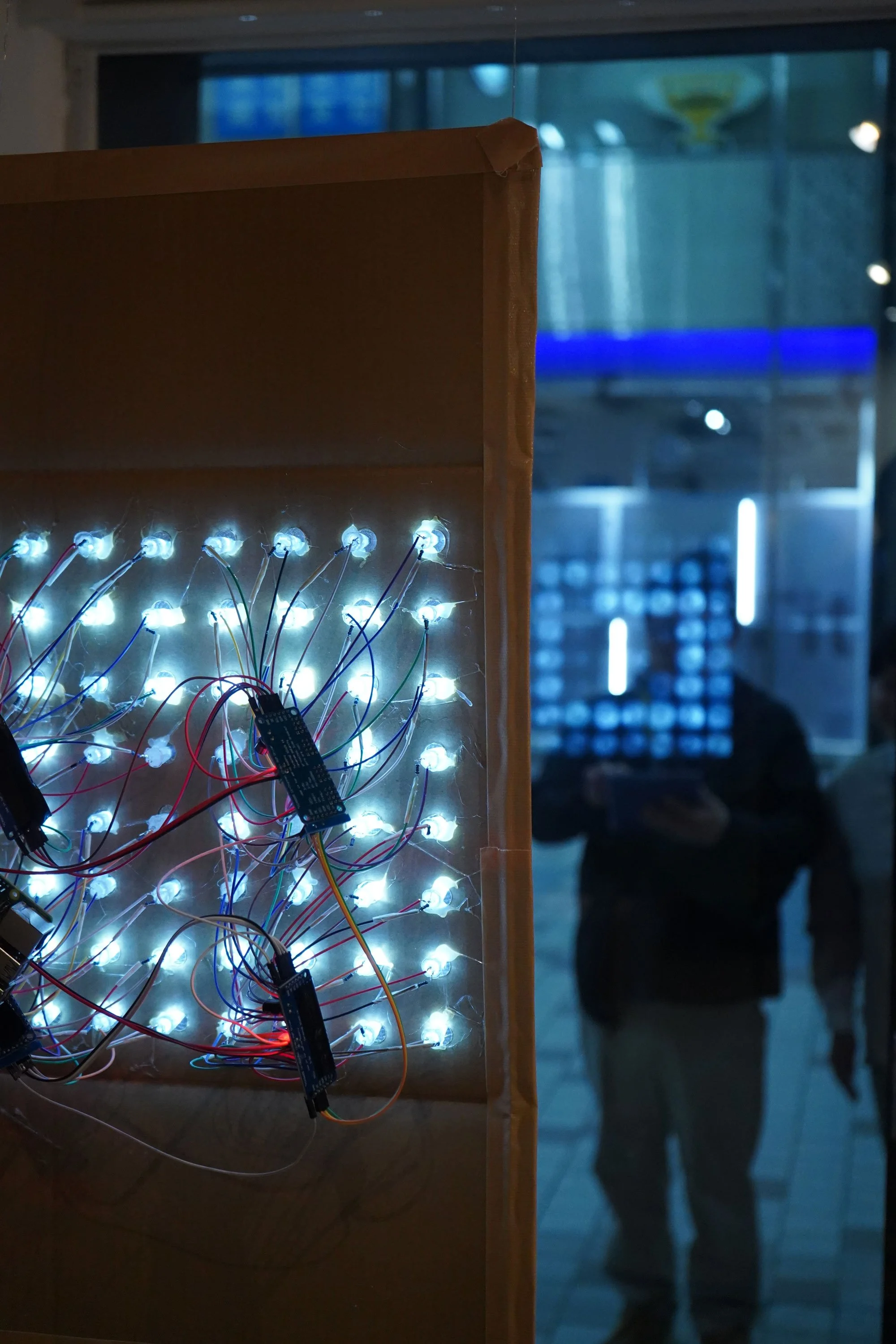
Back view of Square. Visitor playing with interactive program controlling light motion on panel.
Square is a reflection on this relationship we have with technology, and Siah’s interpretation of the “black box”—an entity which inner workings remain elusive. From afar, the audience is drawn to a pulsing choreography of dancing light illuminating concentric circle patterns, reminding one of the touch of breeze upon a silent lake. What they are seeing is in fact an LED “screen”, which cues connections between each “pixel” emulating the surface of water—a liquid veil obscuring its depths.
As one who learns through the act of making, Siah revels in the act of creating “badly”, valuing experience and embodied knowledge over the efficiency we have learnt to expect from technology. Using packing staples such as cardboard, tape and hot glue, the rudimentary structure holds 3D-printed squares and electronic parts purchased from hobby shops. By reducing the “black box” to a spectacle with its structure deliberately exposed, Siah offers an illuminating peek into comprehending the inaccessible world behind technology.
A box, confining Nothingness
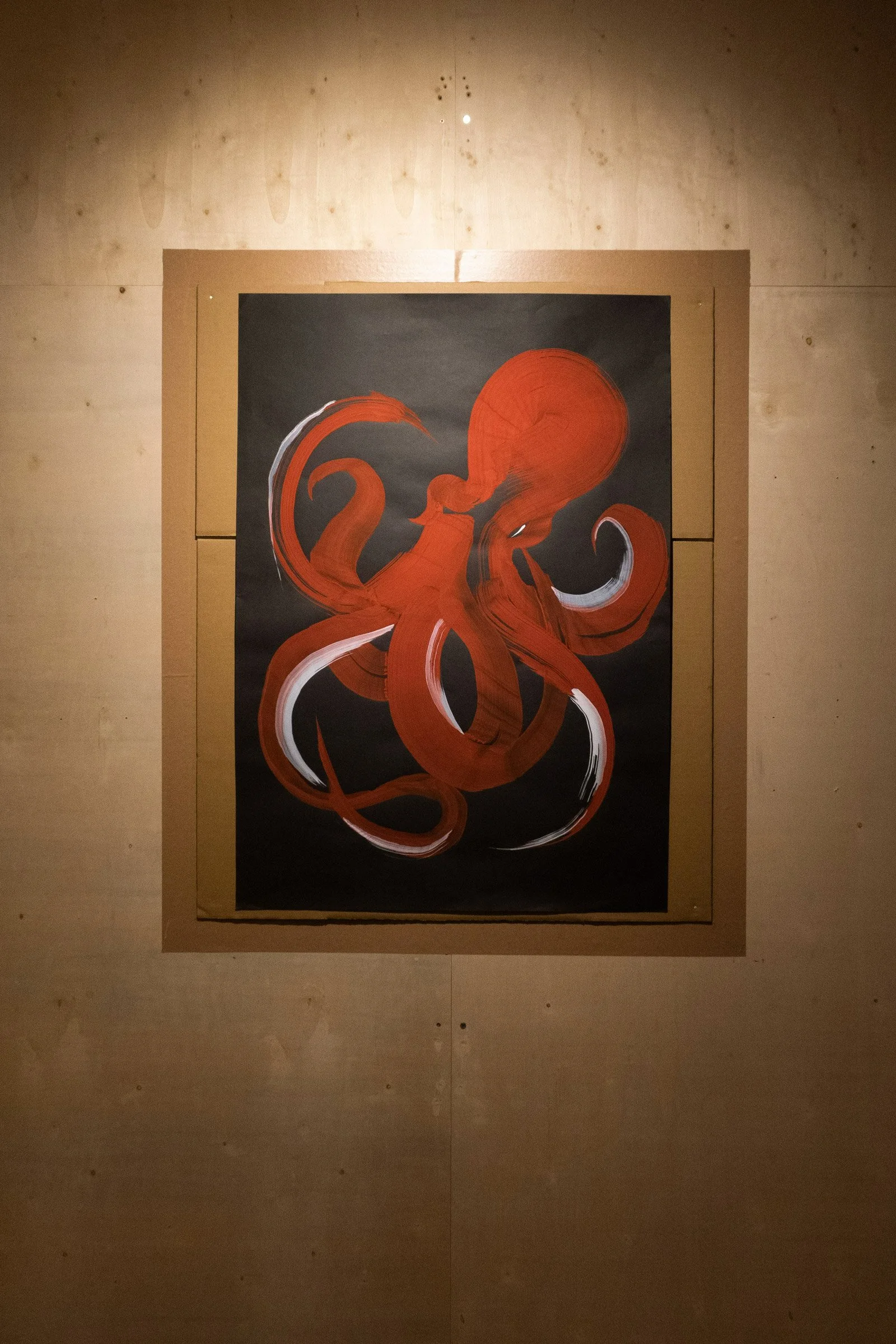
Gun, 2026. Wu Yanrong. 841 x 594mm. Water-based paint on paper.
In Wu Yanrong’s painting, the eye is drawn immediately to each singular object centred within the confines of the paper edge. Yet, these sea creatures seemingly pulse with life through the ebb and flow of deliberate brushstrokes, holding an energy undeterred by the canvas framing them. The “box” thus serves only to “catch” them as we would catch a glimpse. This momentary gaze travels naturally from the dense coalescence of paint in a tight curve forming the octopus’s head in GUN, following the flick of each individual arm flaunting their dexterity, before landing on the menacing glint of the lively eye. The unrestrained spattering of dots on the fish in 1100 is a fleeting reflection of light on scales. In her creatures, reality is secondary; essence is paramount.
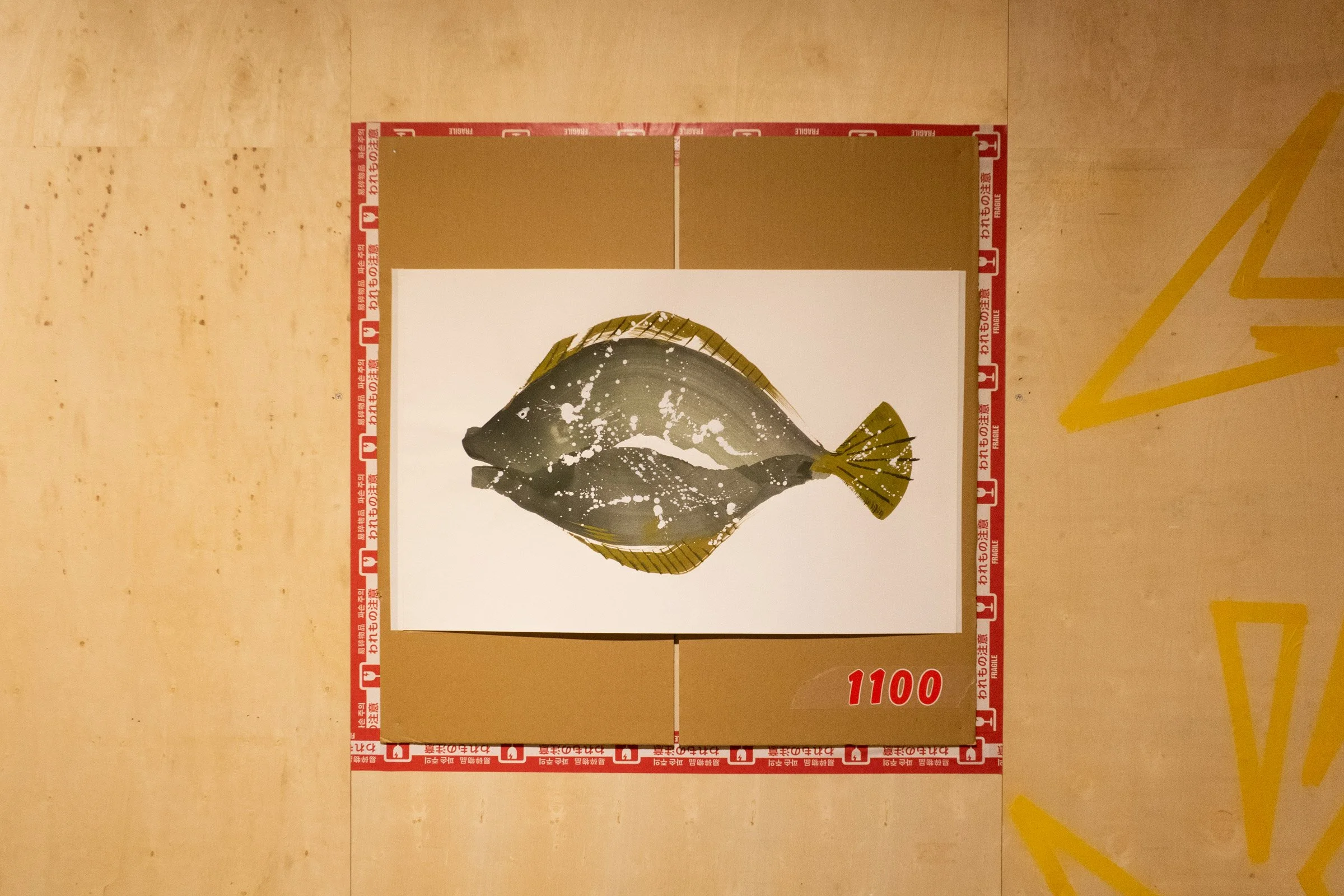
1100, 2026. Wu Yanrong. 650 x 420mm. Water-based paint on paper.
Wu Yanrong’s background in Chinese calligraphy shines through the confidence of each stroke—no doubt the result of countless experiments. What looms before us is the concentration of practice, extended from mind to body, and finally through the tip of the brush.
The Uses of Not
Hollowed out,
clay makes a pot.
Where the pot’s not,
is where it’s useful.
Cut doors and windows to make a room.
Where the room isn’t
there’s room for you.
So the profit in what is
Is in the use of what isn’t.[3]
Chinese painting has often been defined by its use of “虚”, translated to mean the “void” or “nothingness”—one of the cornerstones of Dao philosophy. [4] Similarly, the use of a box is in the space it “contains”. Allowing space for the audience to interpret meaning from a lack of detail is seen as genius, and achievable only through stoic observation of the living subject. Ironically, the artist encountered these subjects at the seafood wholesale marketplace in Takamatsu—chaos to the unfamiliar observer, systematic to those whose livelihoods depend on it, and a death sentence to the beings confined to their styrofoam prisons. Yet, she erases these physical boundaries with the calm of the void, lifting only the vitality of the creatures in a moment where their future remains unknown, and laying them down on a sheet.
A box, objectifying risk and motion
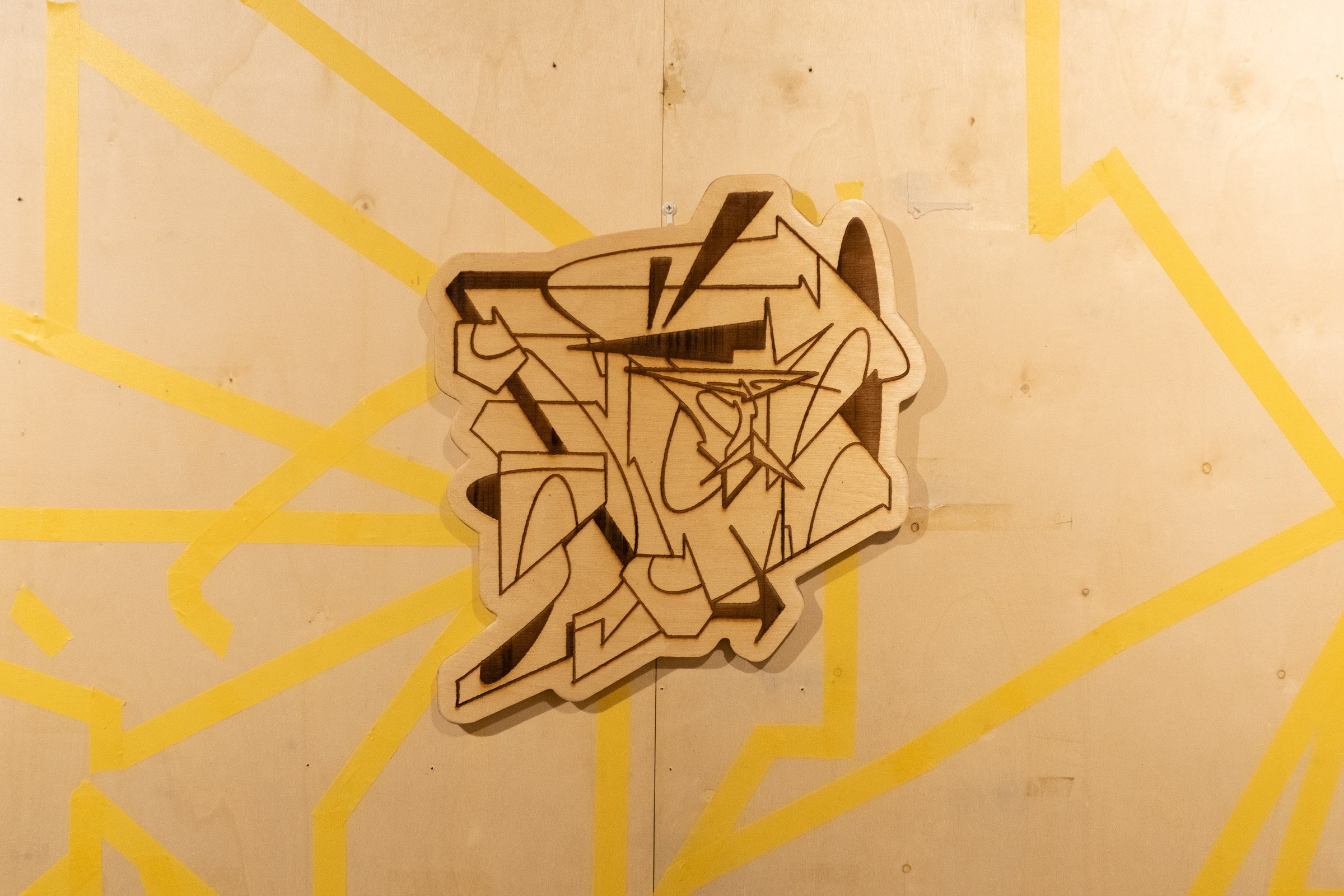
FBU2026E, 2026. Chong Wah. 360x360mm. Laser engraving on wood panel.
Inversely, one might struggle to locate the void in Chong Wah’s work; or even the subject, at first glance. Slipping from the minimalism in Wu Yanrong’s canvases to his dynamic lines that ping from edge to edge is akin to waking from a meditative state straight into a sports arena. Drawing from the flow of motion, the sharp angles and tight intersections of his lines are an exercise in ordered randomness, holding excitement brinking on an anxiety barely contained within its frame. Using his current obsession with motorcycles as a point of fascination, Chong Wah captures the machine not just as a stationary lump of metal, but as a presence encapsulating its noise, motion, and individual character.
The common warning in Chinese to those who ride motorcycles in Singapore is this: “駕車是鐵包人,駕摩托車是人包鐵”—in a car the human is “wrapped” in a metal box; but on the motorbike, the metal is “wrapped” by the human, unprotected outside the enclosure. The thrill that comes with this risk is echoed in the spontaneity of the artist’s lines, a style cultivated from his ongoing graffiti practice. The limited lifespan of graffiti in public spaces is of unsaid consensus among the players; sparking from an impromptu decision during set-up, Chong Wah’s lines splay out from his “canvases” with painter’s tape, forming a temporary “mural” that unapologetically inhabits the exhibition space.
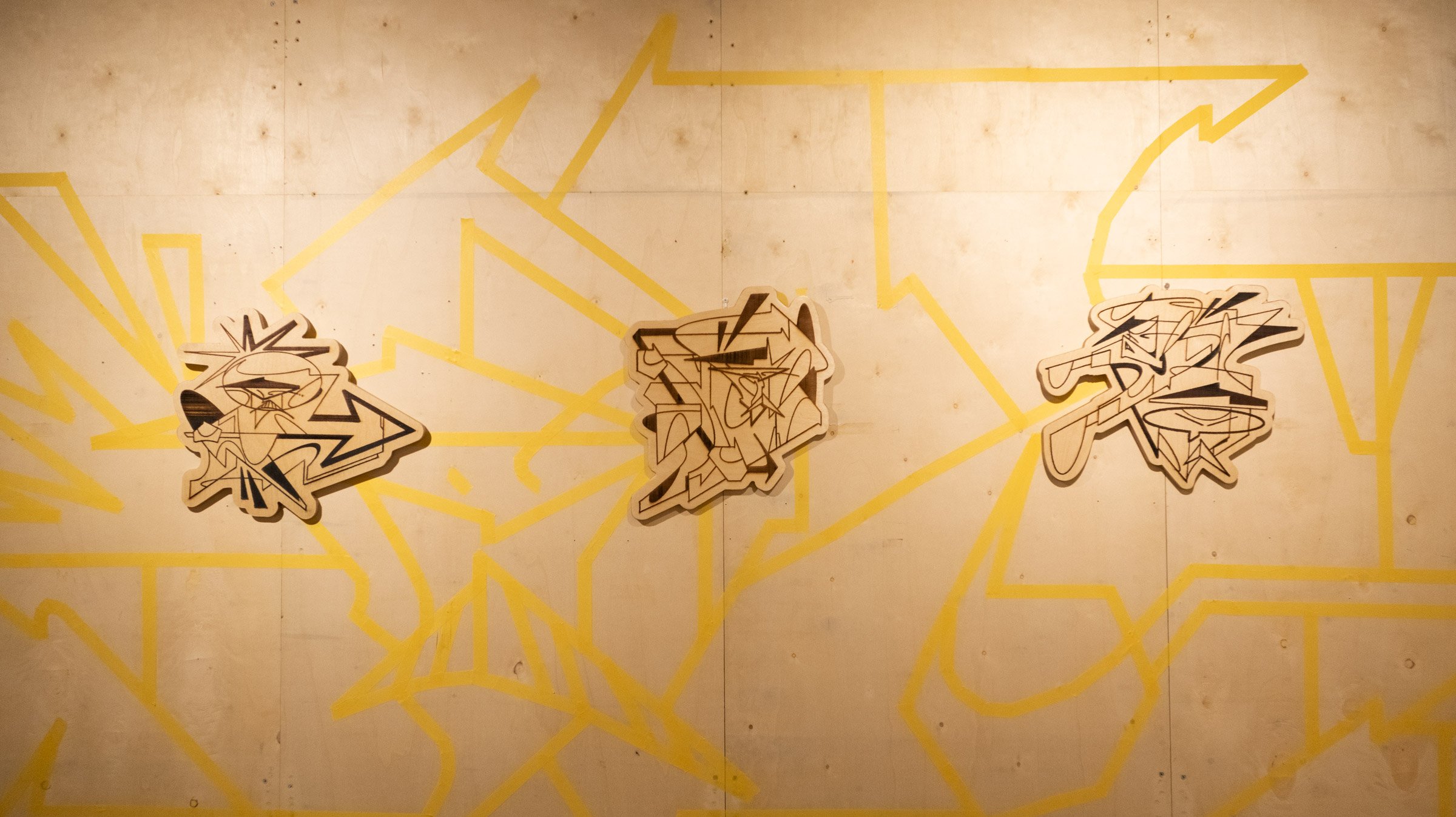
From left: Installation view of FBU2026A, FBU2026C, FBU2026B, with painter’s tape. Chong Wah. Dimensions vary. Laser engraving on wood panel.
Looking at his busy compositions that strain against stillness, one might recall the Futurism movement in art (1909). Perceiving the world to be in constant movement, it was the only modern art movement that used motorcycles as a subject matter, commonly expressing “lines of force”, which intend to convey the directional tendencies of objects through space; "simultaneity," which combines memories, present impressions and anticipation of future events; and “emotional ambience” in which the artist seeks by intuition to link sympathies between the exterior scene and interior emotion. [5] While it is clear the Futurists celebrated the abstract expression of speed and noise like Chong Wah, the latter’s artworks seem to deviate in its containment of this energy; lines bounding around, then returning into a single entity. Ironically, while the Futurists fought to leave the canvas explosively, Chong Wah has shaped that box around his solitary compositions by redefining the canvas itself.
A box, a fragile conundrum
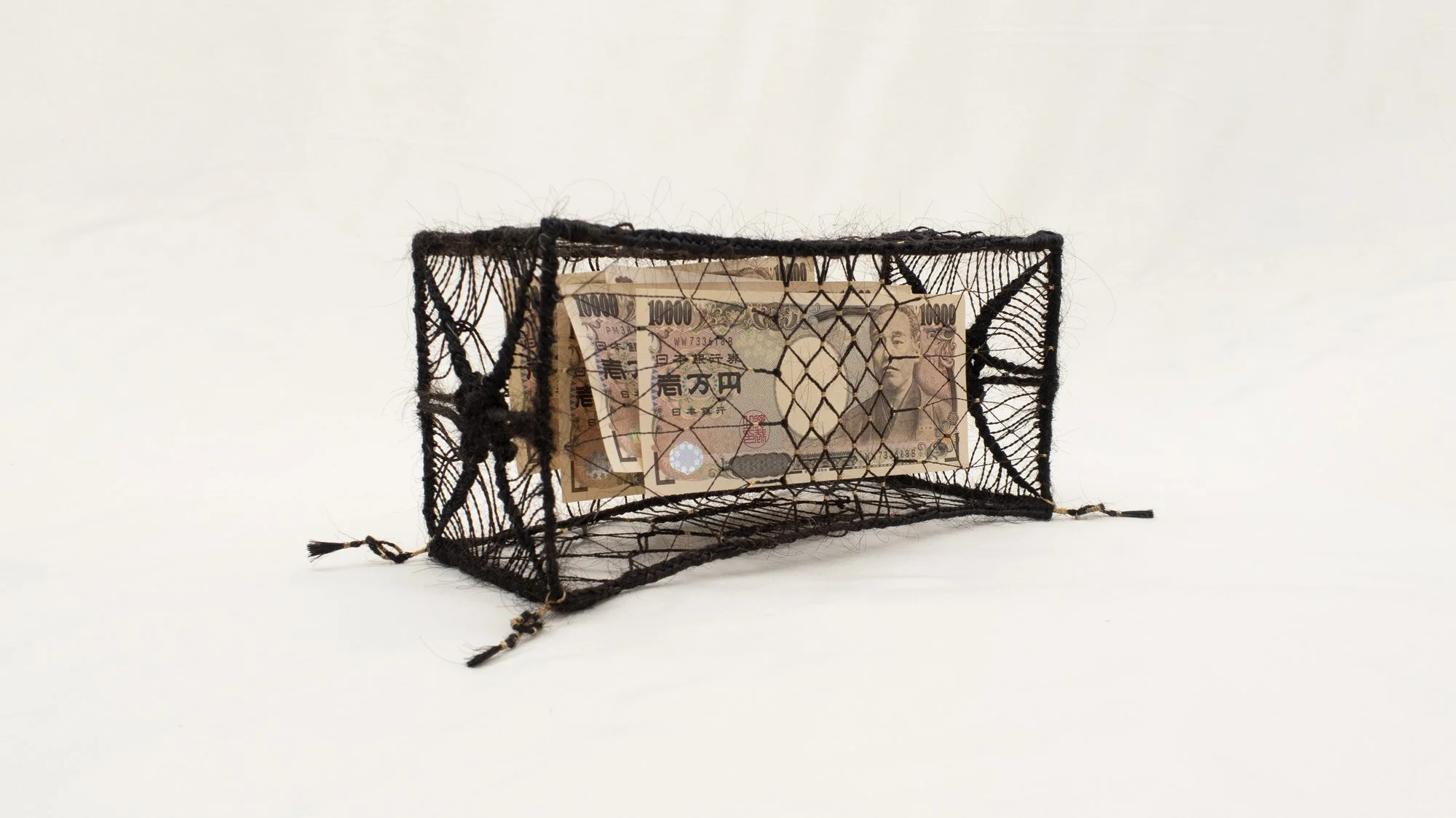
JPY50,000 (SGD414.94), 2026. Kelly Jin Mei. 120mm x 10mm x 240mm. Artist’s hair, wire, Japanese bank notes, glass beads
Boxes might house a delicate item, protecting it; but what about boxes which are precious in themselves, such as Fabergé eggs? Kelly Jin Mei’s sculpture titled JPY50,000 (SGD414.94) is a contemplation on the value of Time. This “box” holds 5 JPY10,000 bank notes, visible through the gap in its “walls”, and is selling for the price stated in its title*. The catch: the box has to be destroyed in order for you to access the bank notes. While this sounds like a simple enough feat, a closer look would reveal the nature of its uncanny material—a familiar, squeaky sheen, hundreds if not thousands of fibre ends sticking out rebelliously—it is hair. The artist used strands of her own hair collected over a period of 2 years, which were braided into a web encapsulating the trapped money. While hair costs nothing and is accessible to most human beings, its length is a reflection of time having passed, and its intricate braids evidence of laborious craft.
In her practice, Jin Mei often plays with paradoxes that nudge the audience into questioning their own perception of value. If hair and labour have no material value, why would one hesitate to purchase the sculpture, then destroy it to recoup losses? Does having ownership give you the right to destroy something? The artist has often played both the role of maker and destroyer in previous work, using that to observe empathy in the viewers. Now, she invites the audience to be in that position, sitting on the fulcrum. What would have to be sacrificed in exchange for the JPY50,000? The artist uses this conundrum to demonstrate “Soft Power” over “Hard Power”, hinting at the effectiveness of emotional manipulation over aggression.
A box, holding heritage and conversation
Takamatsu has seen its fair share of foreigners due to it being one of the host cities of the Setouchi Art Triennale, and part of the Shikoku Pilgrimage (Henro). Despite that, the “Peranakan” identity is still unfamiliar locally. Carmen Chen of Gravy Baby introduces their unique cuisine to Takamatsu, embracing the flavours and methods from her heritage yet venturing outside the traditional framework. Using a fusion of Malay and Chinese cooking methods with spices and key ingredients like coconut milk naturally available in the Southeast Asia region, Peranakan food is recognised for their rich gravies, fragrance, and attention to detail.
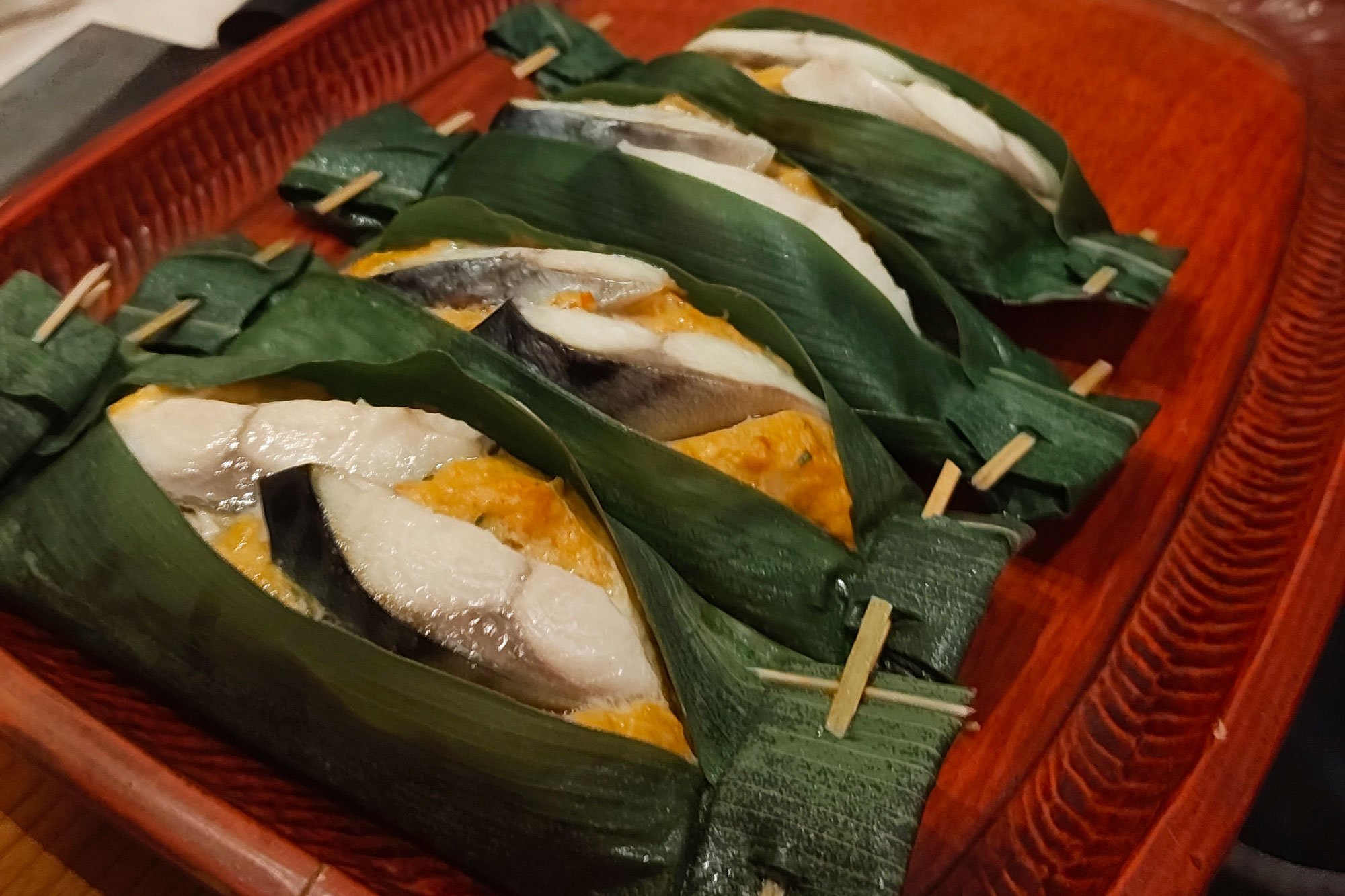
Otak-Otak presented by Gravy Baby.
If there is one coincidence between Japanese and Peranakan culture, it would be their obsession with “packaging”. Both cultures seem to delight in whetting appetites through concealment, though in the case of Peranakan kuehs (bite-sized snacks usually made of rice flour or tapioca starch), the “packaging” serves as part of the cooking method. Uncooked ingredients are wrapped securely in Pandan or bamboo leaves before being steamed, allowing the fragrance of the leaves to infuse. These wrapped “food parcels” mirror the birth of Peranakan heritage, borne through migration of people who settle, then absorb the local influences. In this instance, the “box” is not a boundary, but a vessel—more a boat than a container—that carries, absorbs, and becomes that which it envelopes.
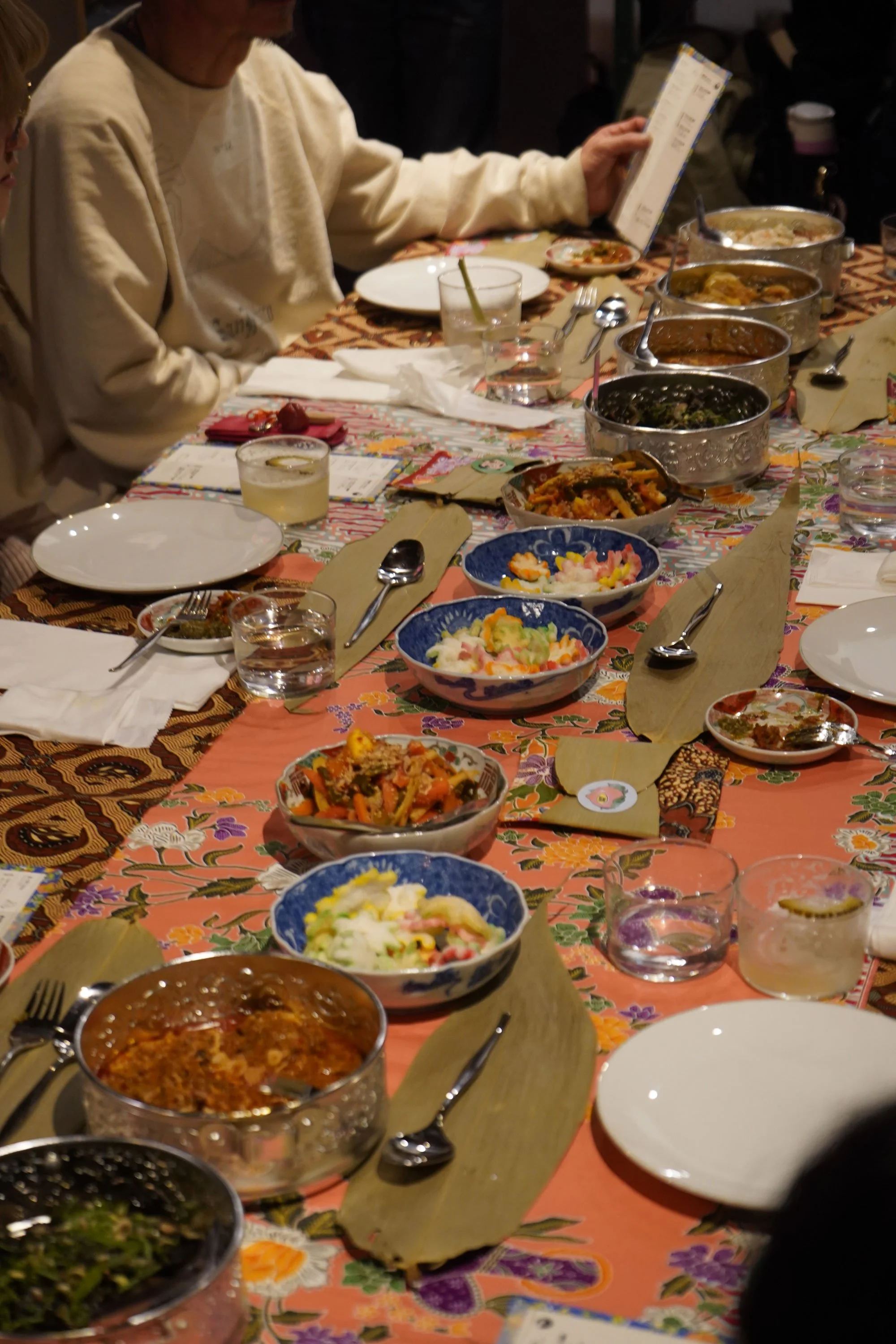
Peranakan dinner by Gravy Baby. Photo by Yamamoto Rei.
While less common in Japan, private dining experiences have been popular in Singapore ever since the global pandemic in 2020.[6] With the post-lockdown surge of commercial rent and sharpening of culinary skills came the natural progression of people opening their dining rooms to the public. People kept coming back, not only for unique menus but for the conversations. In modern society where people are increasingly facing screens or eating takeout meals alone, communal dining experiences force you out of your comfortable shell, seating you next to a stranger. Doused in the light of new spaces, exotic flavours and very importantly, unfamiliar aesthetic tastes, one finds that the tongue naturally relaxes into conversations. Gravy Baby’s dining experience spanning a long communal table and sharing plates runs almost like a performance, with dishes interspersed with candid sharing about the art by the artists, served alongside the remedy to jittery conversation—drinks.
A box, as something you think out of
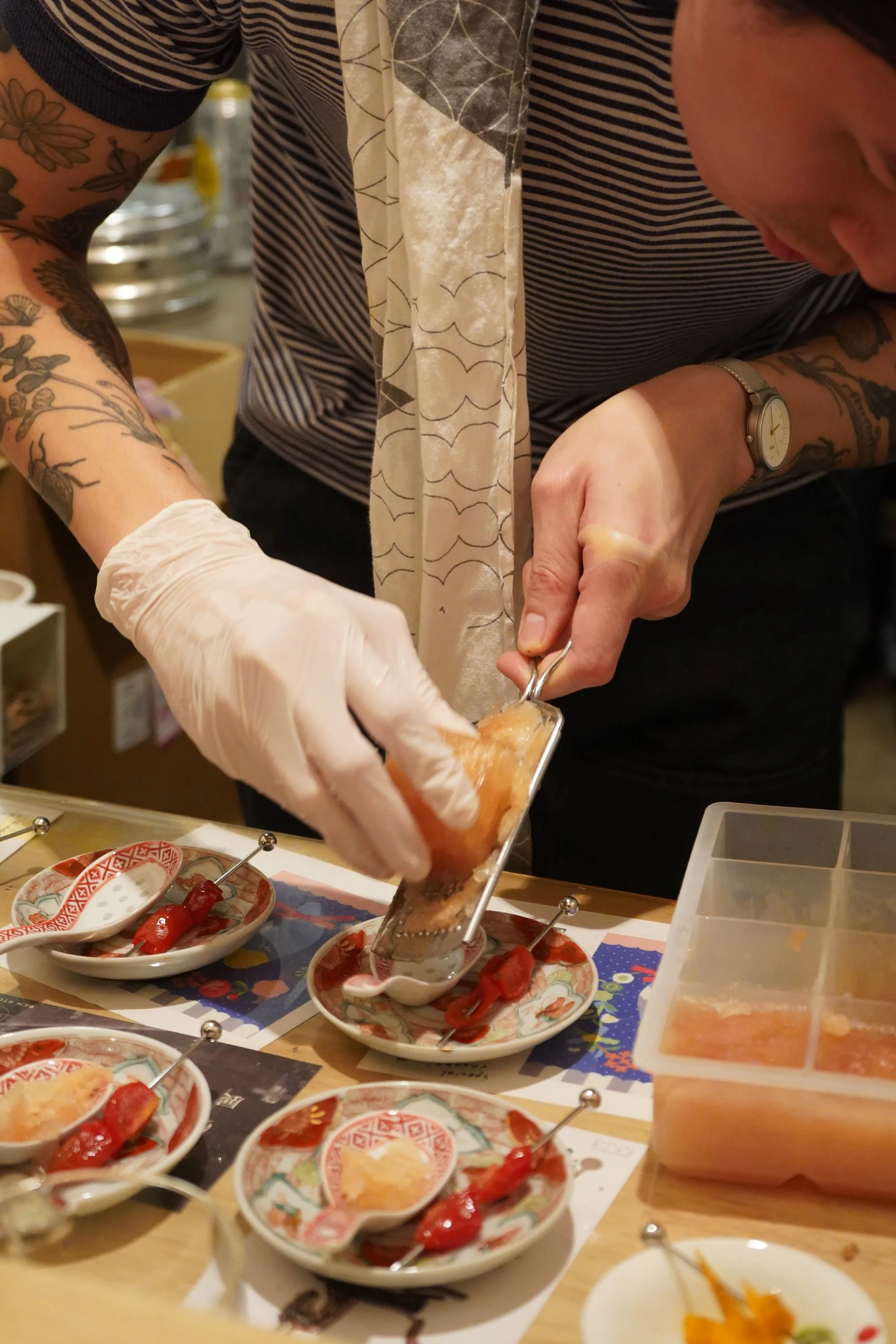
Tomato Slush presented by Ken. Photo by Yamamoto Rei.
Ken whips up thoughtful accompaniments to the dishes based on each flavour profile, delightful bursts of intrigue that bring the dishes together into a harmonious concerto. Classic drinks act as a launchpad for experimentation; ingredients are defined beyond their common usage. The experience opens with tomato, shiso and olive oil—except not in a salad as you might expect, but a slushie that shocks the palate with its temperature and acidity. The traditional Paloma cocktail with its citrusy notes leans into its Japanese environment with a local Sake. You may choose to end your night in two ways: Italian, with a dark roast coffee made with beans from a Singapore roastery, or Chinese, with the highly sought-after Duckshit tea. Neither the ingredients nor the style are new; yet drawers have been pulled out and exchanged between different chests, considering classics in new contexts.
Defining, classifying and organising things as a means of comprehension is a survival skill that continues to bemuse humans, evident even in the aforementioned personality test. Such taxonomies can be, however, subjective and limiting especially in living creatures that continue to evolve. Challenging the expectation of streamlining, the participating creatives cross freely between mediums and disciplines. The format of the exhibition itself breaks down the white walls of a gallery space, converting passive observation to engaging discussion via one thing that transcends languages: nourishment.
The outlines of a quintessential box have been reworked, whether by thinking out of it, about the space within it, or transcending it altogether. Spontaneous strokes link Wu Yanrong’s and Chong Wah’s compositions. The dinner served by Gravy Baby and Ken is a product of taking things apart and putting them together differently, echoing Chong Wah’s re-interpretation of a motorbike. Ironically protected by its human rider, his unlikely armour resonates with Jin Mei’s fragile enclosure of hair, which develops meaning through exposing its contents just as Siah’s open “box” allows us to encounter technology more intimately.
In a world where we gradually separate ourselves into boxes, physically with rooms and psychologically with labels, HAKO demonstrates using them to initiate rather than impede imagination, include rather than exclude; thus inviting the audience into a conversation contemplating the form of their own metaphorical boxes.
[1] Nagao, T., & Saitō, I. (2003). Kokology: The game of self-discovery. Barnes & Noble Books.
[2] Haramis, N. (2025, April 22). Boxes Almost as Valuable as What They Contain. The New York Times Style Magazine. https://www.nytimes.com/2025/04/22/t-magazine/japan-boxes-packaging.html
[3] Le Guin, U. K. (1997). The Uses of Not. In Lao Tzu: Tao Te Ching (pp. 28–28). text, Shambhala.
[4] Zettl, F. (2021, May 30). The Essence of Chinese Painting (IX). Zen Art and Dao. https://zettl.blog/2021/05/the-essence-of-chinese-pain
[5] Humphreys, R. (2006). Futurism. Tate Gallery Publishing.
[6] Teo, J. (2025, December 16). Home-based Dinners are Bringing Back the Missing Soul in S’pore F&B Scene. Vulcan Post. https://vulcanpost.com/907234/home-dining-businesses-singapore/
* Only with certain non-monetary conditions or “sacrifices” specified by the artist